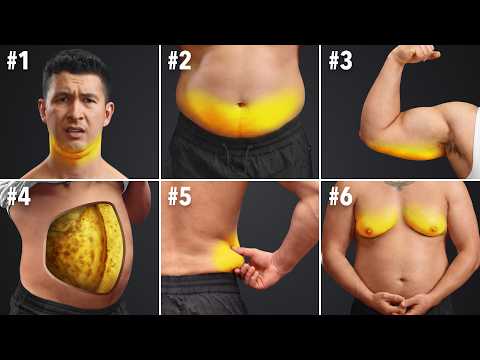
This video tests whether any exercise can match the fat-burning payoff of 10,000 steps in less time, using a lab-style breathing mask that measures calories more accurately than a smartwatch. The big takeaway is surprising: walking still holds up well, but incline walking, StairMaster, and in some cases burpees can dramatically speed things up, depending on your body, fitness, and whether you can actually stick with the workout.
The Baseline: Why 10,000 Steps Is Hard to Beat
An hour and a half into a long walk, hips tightening, boredom creeping in, the experiment starts to reveal the real problem with 10,000 steps: not difficulty, but time. The host, Melody, and Dennis do the full thing in one shot, mostly to create a clean baseline. That choice matters because every exercise that follows gets judged by one question: how many minutes would it take to burn the same calories as this walk?
The numbers are more impressive than the internet often gives walking credit for. The host burns 418 calories, Melody 438, and Dennis, who weighs about 30 lbs less, burns 342. From that, the video pulls out a simple rule of thumb: take your body weight in pounds and multiply it by 2.7 to estimate the calories you might burn from 10,000 steps. That gives the whole video its anchor. Walking is not flashy, but it works.
Then comes the first shortcut attempt, the Japanese walking method: 3 minutes slow, 3 minutes fast, repeated for 30 minutes. On paper, it sounds clever. A study behind it showed strong results, and the protocol recently got popular because it promises more in less time. But the catch is intensity. During the fast intervals, you are supposed to hit about 70% of your max heart rate. For the host, that is about 130 beats per minute, and he just cannot get there by walking fast enough. Even with what he jokes is “aggressive arm jerking,” his heart rate stalls in the low one-teens and drops quickly during recovery.
That mismatch produces the first big lesson of the video: the same workout can behave very differently in different bodies. The host burns 144 calories in 30 minutes, Dennis 114, making it basically no better than ordinary walking for time savings. But Melody gets her heart rate much higher and keeps it elevated even during the slower intervals, burning 249 calories in the same 30 minutes. For her, it could replace 10,000 steps in just 53 minutes instead of 91. Same protocol, completely different result.
The next home-friendly test looks almost ridiculous, jogging in place to a beat, like a “fat loss nightclub” in the living room. The hidden advantage is pacing. Because everyone follows the same beat, nobody can quietly slow down. Heart rates rise about 10 beats per minute higher than during normal walking, yet nobody feels especially out of breath. Still, the calorie result is modest. It ends up being almost a one-for-one replacement for walking, with every 10 minutes roughly equal to 1,000 steps. That may sound disappointing, but the unexpected angle is that this is actually useful. If you are stuck inside, watching TV, or trying to sneak in movement at home, it gives you walking-like calorie burn without needing to go anywhere.
From Squats to Burpees: When Bigger Muscles Speed Up the Burn
The mood changes the moment the metronome starts and everyone begins air squats at 30 beats per minute. Within seconds, Dennis is complaining, the host is mocking his form, and the experiment finally shifts from movement that is easy to sustain to movement that taxes the biggest muscles in the body. That shift is the real engine of the video. Calories rise when more muscle is working, and when that muscle has to work harder.
Squats prove the idea immediately. In just 10 minutes, the host burns 81 calories and Melody 78, nearly double the pace of regular walking. Dennis somehow burns only 29, which turns into a running joke because his reps are so questionable. But the more interesting point is not just fat loss. The host mentions a recent study showing that for people who sit all day, doing just 10 squats every 45 minutes beat one longer 30-minute walk for controlling blood sugar after meals. The explanation is simple and memorable: your leg muscles act like sponges, soaking up sugar from the blood and using it for energy. So even a brutally short exercise can matter for health in a way that goes beyond calorie math.
Then the video swerves into a false promise, the vibration plate. It is sold as a passive fat-loss hack, common in Asian households and backed by one study where 35 women with obesity trained 14 minutes twice a week for 10 weeks and saw stronger legs, less body fat, and more belly fat reduction than 15 women who did nothing. But the host digs deeper and finds the study was funded by the manufacturer, and the comparison group did no exercise at all. The actual test result is brutal: 28 calories in 10 minutes for the host, 22 for Dennis, 33 for Melody, only a little more than standing. The machine might relax you, but it is not replacing 10,000 steps unless you stand on it all day.
Rebounding on a mini trampoline is the opposite. It looks playful, almost childish, and that turns out to be part of its appeal. Online claims say 500 to 800 calories an hour, close to running. The real numbers are lower, 62 calories in 10 minutes for the host, 41 for Dennis, 66 for Melody, but it still beats regular walking for all three. That is the pattern starting to emerge: enjoyment matters because the workouts that feel fun may be the ones you will actually repeat.
Rucking, walking with a 20-lb weighted vest, sounds like it should be a game changer because it comes from military training and has exploded as a fat-loss trend. But it only speeds calorie burn by about 20 to 30%. Useful, yes. Revolutionary, no. Over 20 minutes, the host burns 108 calories, Dennis 91, Melody 128. If you wore the vest for a whole 10,000 steps, you might get an extra 100 calories or so. Not nothing, but not magic.
The first truly dominant result arrives with incline walking at 3 mph and 9% incline. The host enforces a no-hands rule because leaning back on the machine would erase the incline’s effect. The explanation is mechanical: each 1% increase in incline should raise calorie burn by roughly 10 to 15%, because your quads and glutes have to push harder every step. The payoff is huge. In 20 minutes, the host burns 166 calories, Dennis 124, and Melody 252, the highest so far. Melody’s result is especially striking because she carries more of her muscle in her lower body, which likely helps explain why she outperforms the others. The host uses that to slip in a broader idea: more muscle makes getting and staying lean easier, which is why cardio and strength training work better together than either one alone.
Cycling is a useful contrast. Because everyone works at a self-chosen pace, the results reflect personality almost as much as physiology. The host pushes hard and burns 130 calories in 20 minutes, more than Melody’s 119 and Dennis’s 88. Same machine, different effort. That sets up burpees perfectly. Burpees remove the illusion that intention and output are the same. In 10 minutes, the host hits 100, Melody gets 85, Dennis reaches 73 with form that visibly falls apart. The heart rates are the highest of the whole test to that point, and the host explains the afterburn effect, a small extra calorie burn after exercise while the body recovers. Even counting that, the boost is only about 10%, but it is enough to push burpees to the top spot for the host at 128 calories in 10 minutes, with Melody at 95 and Dennis at 45. It is a powerful reminder that the hardest exercise on paper only wins if you can maintain the quality.
The Winners: StairMaster, Sprints, and the Real Best Exercise
The camera is left running in the garage, and when the host comes back to inspect the footage, he catches Dennis doing exactly what he feared: leaning more and more body weight onto the StairMaster to make it easier. It is a funny moment, but it also reveals why this machine is such a serious calorie burner. Unlike walking or cycling at your own pace, the StairMaster forces accountability. The steps keep coming. You either keep up or you fail.
It also checks both boxes the host has been building toward all video. First, every step requires lifting your body weight. Second, it uses huge lower-body muscles over and over. Melody becomes the clearest example. Her heart rate climbs to 175, even higher than during burpees. The host, who is used to doing StairMaster after workouts, does not spike as high, but still gets a strong result. After 20 minutes, he burns 224 calories, Melody an enormous 300, and Dennis 136, plus a little extra afterburn. That makes StairMaster the top option for Melody and Dennis, and a very close second for the host.
Then comes the final test, sprint intervals. There is a built-in expectation that this should dominate because it is the most intense thing they do. Everyone goes all out, and Dennis even redeems himself by showing real effort and speed. But this is where the video delivers one of its most useful surprises: intensity does not automatically mean the most calories in a short session. Most of a sprint workout is actually recovery, short walks between efforts. So even after including afterburn, the totals for 10 minutes are only 95 calories for the host, 61 for Dennis, and 96 for Melody. Respectable, but not enough to beat the leaders.
The closing conversation is where the experiment becomes practical instead of just entertaining. The host is careful not to let the leaderboard create the wrong lesson. He says he does not want people to take this literally and stop walking, because “even plain old walking, it does burn calories and it’s very easy to do.” That is the thread connecting all the data. The point is not that one exercise is objectively best for all humans. The point is that some movements can ramp up calorie burn when time is tight.
The personalized recommendations make that clear. For Dennis, the host picks incline walking, not the absolute top calorie result, but the best combination of effectiveness and honesty because Dennis could not really cheat it and did not complain much. For himself, he picks StairMaster, which fits what he already likes doing. For Melody, the data says StairMaster won, but her preference is incline walking, so the host decides to get her a treadmill for home. That ending lands the main idea better than any chart could. The best exercise is rarely the one that burns the most. It is the one you can actually stick to, whether that is incline walking, jogging around your living room, or plain old walking.
Keep these ideas with you.
- 10,000 steps is time-efficient for effort, not for schedule
The experiment starts with a simple truth most people already feel but rarely measure: 10,000 steps is easy on the body and expensive on the clock. It took over an hour and a half to finish, yet still burned 418 calories for the host and 438 for Melody. That is why walking remains powerful, it asks little from you in intensity, which is exactly why so many people can keep doing it.
- The same workout can be efficient for one person and mediocre for another
The Japanese walking method looked like a clever shortcut, but it split the group in a revealing way. The host could not push his heart rate high enough by fast walking, so the method barely saved time, while Melody reached a much higher heart rate and got a real payoff. A workout is not just a protocol on paper, it is what that protocol does inside your body.
- Big muscles change the calorie equation
Squats, incline walking, StairMaster, and burpees all point to the same pattern: when you force the quads, glutes, and other large leg muscles to work hard, calorie burn rises fast. The host explains it in a way that sticks: muscles are the engine, and harder work from bigger muscles means more fuel used. That is also why the video keeps coming back to lower-body movements as the best shortcuts.
- Passive fat-loss gadgets usually fail the stopwatch test
The vibration plate sounded promising because there was even a study behind it, but once tested directly it produced only 28 calories in 10 minutes for the host. That was barely more than standing still. The memorable lesson is simple: if something claims to burn fat while you barely move, compare it to what 10 minutes of real movement can do.
- The best exercise is the one you will repeat next week
The leaderboard crowned different winners for different people, but the ending rejects the idea of one perfect answer. Melody’s highest calorie burn came from StairMaster, yet she preferred incline walking, so that became the practical choice. Data matters, but consistency beats the theoretical best workout that you secretly hate.
Turn the ideas into action.
For Replacing Missed Daily Steps
Use incline walking when you are short on time. A steady treadmill pace with meaningful incline raised calorie burn far above normal walking, and for all three testers it was one of the most efficient, realistic substitutes for a long step count.
For Blood Sugar Control During Sedentary Days
Break up sitting with short squat sets. The video cites research showing that 10 squats every 45 minutes beat one longer 30-minute walk for post-meal blood sugar control, which makes this a practical habit for office days.
For At-Home Cardio
Swap in jogging in place or rebounding when you cannot get outside. Neither was magical, but both provided walking-like or slightly better calorie burn in a compact indoor format, making them easier to fit into real life.
For Choosing a Sustainable Fat-Loss Exercise
Pick the hardest workout you can recover from and repeat consistently. Burpees and StairMaster won on raw burn for some testers, but the video’s final lesson is that adherence matters more than the chart, because the exercise you keep doing beats the one you admire once.
The complete summary: 3 chapters, 5 takeaways and 4 actionable insights.
Summarised with AI by Bite, an AI YouTube video summarizer and podcast summarizer. Timestamps keep the source close; check important details against the original.
Original video on YouTube