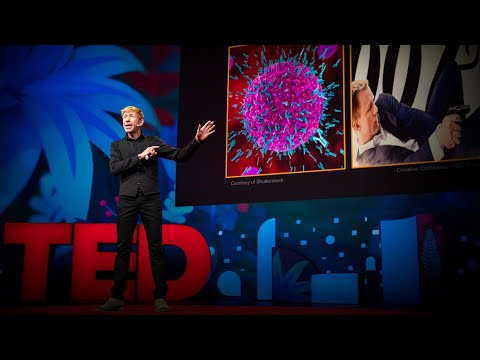
This talk argues that mathematics is hitting a scaling crisis: humans can still create and verify deep proofs, but AI is starting to generate mathematical work faster than people can reliably check it. Tudor Achim’s answer is surprisingly old and futuristic at once, formal mathematics, where proofs are written in a language computers can verify, turning AI from an untrusted prodigy into a dependable research partner.
A 4,000-year-old system meets a modern breaking point
The talk opens on a clay tablet from ancient Babylon, a small dusty object carrying a huge claim: for roughly four millennia, mathematics has run on the same social technology. Someone has an idea, writes it down, other people read it, argue about it, and eventually agree whether it works. That process sounds almost quaint, but Achim frames it as the hidden operating system of civilization, built on creativity, communication, and trust. He then widens the lens with Eugene Wigner’s famous puzzle about the “unreasonable effectiveness” of mathematics. Why should weird ideas born inside a mathematician’s head become the exact language of reality? Non-Euclidean geometry began as a thought experiment and became the mathematics of general relativity. Group theory looked like abstract play with symmetry and became essential for particle physics and crystal structure.
That strange marriage between pure thought and physical reality, he says, is what powers everyday life. The chip in your phone rests on quantum mechanics, itself built on linear algebra and complex numbers. Wireless communication is Maxwell’s equations made practical. Online security depends on number theory, once dismissed as the most uselessly pure branch of math, and now protecting trillions of dollars. AI is not an exception to this pattern but its latest expression: a neural network is, in his phrase, a “monumental structure of applied mathematics,” and learning is calculus moving through landscapes with billions of dimensions.
Then the mood shifts. The same system that carried math this far is now straining under its own success. Achim uses two famous examples to make the strain feel concrete. Grigori Perelman’s 2002 proof of the Poincaré conjecture came in three short, cryptic online papers. One person wrote them, but teams at top institutions spent four years unpacking the logic before the community could confidently say, yes, this is correct. Andrew Wiles’s proof of Fermat’s Last Theorem produced an even more dramatic lesson. After the 1993 celebration, one misplaced thread deep inside the argument caused the proof to unravel during review, and Wiles plus Richard Taylor needed two more years of intense secret work to repair it. The point is not that mathematics is broken. It is that verification is already incredibly expensive even when humans are producing the proofs.
Now add AI. Just two years ago, systems were brittle on entry-level high school contest math. By 2025, they can compete with top students at the International Math Olympiad. A machine may spend four hours generating one proposed solution that takes an expert human up to an hour to check. If that becomes a thousand proofs instead of one, aimed not at school contests but at the Riemann hypothesis, Navier-Stokes, or P versus NP, the old social system collapses under review load. With only a couple thousand mathematicians qualified to check work at that level, and with AI trained on human-produced internet data plus human feedback, we risk both a verification bottleneck and the recycling of human biases into future discovery engines.
Leibniz's impossible dream suddenly becomes practical
At the moment the problem feels bleak, Achim flips the story. No, he says, we are not doomed to drown in unverified claims. But we do need to replace the 4,000-year-old operating system of mathematics. The upgrade is formal mathematics, a way of expressing proofs in a language computers can understand without ambiguity. Before explaining the machinery, he reaches back 400 years to show that this is not a brand-new fantasy but a very old one.
In a Europe fractured by religious and political conflict, Gottfried Wilhelm Leibniz imagined something astonishingly ambitious: a universal characteristic, a perfect language for encoding scientific and philosophical thought. Achim turns this into a three-part blueprint. First, you need a flawless logical language. Second, you need a giant encyclopedia containing verified human knowledge written in that language. Third, and this is the dramatic piece, you need an “engine of reason,” a rule-based mechanism that can derive new truths as reliably as a calculator performs arithmetic. Leibniz thought that with such a system, disputes would no longer be settled by rhetoric. Two people could simply say “calculemus,” “let us calculate,” and resolve the matter through logic. Achim gives the idea a memorable modern translation: a universal calculator for truth.
The unexpected angle here is that Leibniz was wrong about the schedule, not the direction. He believed a small group could build it in five years. He missed by centuries. But in 2025, Achim argues, the pieces finally exist. The logical language is Lean, a programming language and proof assistant. He describes it not as a mere code editor catching typos, but as an environment that inspects the core mathematical argument and tells you whether the reasoning itself has problems. The encyclopedia is Mathlib, an open-source library of about two million lines of Lean code, spanning much of undergraduate and graduate mathematics. His analogy is sharp: it is like a Wikipedia for proven truth, except every edit is computationally certified.
That leaves the engine of reason. Humans could try to write all these formal proofs by hand, but the robotic precision required is exactly where human creativity is least comfortable. This is where the earlier fear about AI becomes the solution. AI is not just another source of more informal papers in English. In the formal system, AI can write proofs in Lean for machines to check, making Leibniz’s dream not philosophical decoration but practical infrastructure.
From blind faith in AI to verified collaboration
The final movement of the talk imagines a very different relationship between humans and machine intelligence. Picture an AI producing a proof of the Riemann hypothesis, not as a dazzling essay that leaves mathematicians exhausted and suspicious, but as a bundle of Lean files. Instead of armies of experts tracing every line by hand and trying to interpret possibly alien reasoning, you hand the files to the compiler. If it builds, Achim says, you know with absolute certainty that the proof is correct. That single shift changes AI from a brilliant but unreliable claimant into a collaborator whose work does not have to be accepted on trust.
This is the deeper promise of formal mathematics. It does not merely save labor. It changes what humans spend their minds on. Achim says we can trade “the tedium of checking” for “the creative joy of discovery.” Humans keep the most human parts of the enterprise: intuition, judgment, conjecture, choosing which questions matter, and charting the course. AI takes on the vast ocean of logical exploration, and the computer certifies whether the destination was actually reached. The concrete image matters here: not replacement, but a division of labor where people steer and imagine while machines search and verify.
He insists this is not speculative science fiction. The transition is already underway. At that year’s International Math Olympiad, automated systems found solutions to five of the six problems in a form computers could check with no human review required. That is already enough for a gold-medal-level performance. So the bottleneck question returns one last time. Will humans choke off math research? Yes, but only if we insist on remaining both the sole thinkers and the sole checkers.
Achim ends on a surprisingly optimistic reframe. Formal mathematics is not about replacing mathematicians. It is about elevating them into a new role, as explorers, architects, and question askers. The destination is what he calls a new era of discovery built on a partnership between human imagination and mathematical superintelligence. The emotional logic of the talk lands there: the future of math is not less human because computers can verify more. It may become more human because people are finally freed to focus on the parts only they can originate.
Keep these ideas with you.
- Math runs on trust, until scale breaks trust
For 4,000 years, math has worked like a high-stakes conversation: one person writes an argument, others inspect it, and the field decides whether to trust it. That worked when proofs arrived at a human pace. But when one proof can take years for the world’s best experts to verify, and AI may soon generate thousands, trust stops being enough and becomes a bottleneck.
- Leibniz sketched the blueprint for machine-checked truth
Long before computers existed, Leibniz imagined a perfect logical language, a library of verified knowledge, and an engine that could derive new truths mechanically. His dream sounded wildly premature, like trying to build Google, Wikipedia, and a theorem prover in the 1600s. The shock of the talk is that today those pieces actually exist in forms like Lean and Mathlib.
- Formal math turns proof-checking from debate into compilation
An ordinary math paper is like a brilliantly written legal argument, persuasive but still dependent on expert readers. A formal proof in Lean is more like software that either compiles or fails. That means the question shifts from “Do enough experts believe this?” to “Does the machine certify every logical step?”
- The goal is not AI mathematicians alone, but a new division of labor
Achim’s vision is not humans getting pushed out of mathematics. It is humans doing more of the high-level work, choosing problems, shaping conjectures, and using intuition, while AI handles exhaustive logical exploration and computers verify the result. The win is not just speed, but moving human attention from tedious checking back to discovery.
Turn the ideas into action.
For Mathematical Research
Start formalizing important results in proof assistants like Lean, especially foundational lemmas and heavily reused arguments. This matters because the value of formal math compounds: once a result is machine-verified and added to a shared library, future proofs can build on it without reintroducing ambiguity.
For AI-Assisted Theorem Proving
Train and evaluate systems on producing machine-checkable proofs, not just persuasive natural-language solutions. This matters because a proof that sounds right still creates a human review burden, while a proof that compiles converts AI output into reliable knowledge.
For Scientific Knowledge Infrastructure
Invest in shared, open formal libraries like Mathlib rather than isolated one-off demonstrations. This matters because a formal ecosystem becomes a reusable encyclopedia of verified truth, making future discovery faster and less dependent on rediscovering or rechecking old results.
The complete summary: 3 chapters, 4 takeaways and 3 actionable insights.
Summarised with AI by Bite, an AI YouTube video summarizer and podcast summarizer. Timestamps keep the source close; check important details against the original.
Original video on YouTube