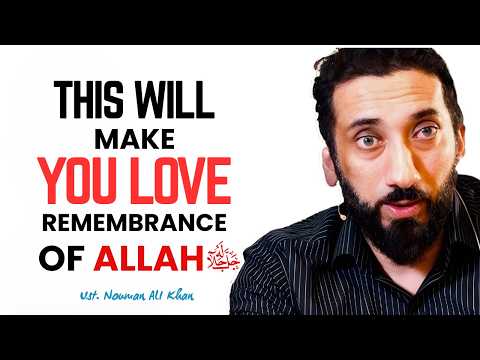
Nouman Ali Khan turns the story of Ashab al Kahf into a challenge for young Muslims: stop treating faith like a bunker and start treating it like a mission. The talk matters because it moves from identity and peer pressure to a practical formula, worship, knowledge, service, then ends with a bigger demand: do not just get a job, build something that changes society.
Faith Is Not a Bunker, and Youth Are Not the Problem
He opens with a cave, but not the way most people expect. The young men of Ashab al Kahf are usually remembered for withdrawing, hiding, escaping a corrupt society. Nouman flips that instinct on its head. He says they only withdrew when their lives were literally under threat, when execution was the price of faith. Until that point, the lesson is the opposite of isolation. Muslims are supposed to engage society, not treat everything outside as contamination and themselves as a besieged minority huddled behind walls.
That is the unexpected angle of the whole first section: a defensive Muslim mentality already accepts defeat. If your basic posture is, "I have to save myself," then falsehood has already pushed truth into retreat. He contrasts that with the Quranic image of truth being thrown against falsehood, with falsehood taking the hit and running. In other words, Islam is presented as something active, not timid, something that questions what is broken in the world and works to change it.
Then he lingers on one small Quranic detail. Allah explicitly calls the people of the cave "fityatun," young men. Nouman says that detail is not random, because the young are the ones most pressured to blend in. He makes it painfully concrete by describing high school age, the stage when people suddenly become hyper-aware of being different, of dressing differently, sounding different, even trying to make religiosity look more acceptable, more hip, more assimilated. That is exactly why their youth matters. They resisted at the age when conformity is strongest.
From there he lands his first major challenge. Muslim communities keep talking about "saving the youth," but he argues the youth are supposed to save everyone else. That means refusing drift. He says he is personally offended by college students in their junior or senior year who still shrug when asked why they chose their major. "I guess" is not a life plan. For him, that is failure in both deen and dunya. He pushes the audience to ask two sharper questions: what are you actually good at, and how will you put that ability in the service of Allah's deen? His answer is not modest ambition. It is to aim high, set a five-year plan, a ten-year plan, and stop living as if the biggest horizon is a job, an apartment, a car, and marriage.
The Three Foundations: Worship, Knowledge, and Service
The talk suddenly becomes very practical. Instead of vague inspiration, he asks the audience to imagine one year from now and be able to point to measurable growth in three areas. The first is worship, and he starts where real life usually falls apart, sleep. His blunt line is funny because it stings: those late-night "deep conversations" over hookah and shawarma are not reviving the ummah. If you wake up at 10:00 a.m. for Fajr, the problem is not lack of passion. It is lack of discipline.
So his first prescription is small but concrete: sleep earlier, wake earlier, fix Fajr, make mornings productive, and begin the day with Quran. He ties this to barakah, the kind of divine blessing that makes a day feel mysteriously more open, more focused, more creative. He says even trying it once will make the difference visible. That matters because he is linking spiritual practice to effectiveness, not just piety. Before changing the world, you have to be able to change your day.
The second area is knowledge, but he carefully separates it from worship so that religious learning does not become an ego project. Someone can know tajwid and tafsir and still have terrible salah. That, for him, exposes knowledge that has not yet become real. His recommendation is strikingly modest and demanding at the same time. He is not telling everyone to become a scholar. He is saying every Muslim should become educated enough to be anchored. His yearly curriculum is simple: study the seerah once each year, revisit it through different books, and make substantial progress in Quran through focused study of an actual surah, not random passages. His example is memorable: make it your "Surat al Kahf year," memorize it, study its tafsir, read its translation, learn its vocabulary, consume every lecture or article you can find on it.
He also answers a common false choice. When a student asks whether understanding Quran is more important than memorizing it, he rejects the split itself. Memorization is part of understanding because repetition opens new layers. The tenth recitation shows what the ninth did not. To round this foundation out, he adds one light elective: memorize three or four duas from the Prophet and make them part of daily life.
Then comes the third area, service. Help people, he says, and do not wait for an Islamic logo to validate it. Volunteer with Habitat for Humanity if that is where the need is. Join good causes even if non-Muslims lead them. In fact, he recommends that, because it lets others see Muslims care too. His warning against turning service into performance is sharp: do not tweet it, do not humble-brag it, just let it make you a better human being. For teenagers especially, service interrupts self-absorption. It pulls a person out of the tiny universe of image, status, and social approval and forces maturity through contact with real need.
Do Not Just Get Hired, Build Something Big Enough to Serve the World
He raises the stakes by turning career advice upside down. If you are going to med school, he says, do not merely aim to be a doctor, aim to own a hospital. If you study pharmaceuticals, do not just enter the industry, clean it up. If you pursue an MBA, do not disappear into what he calls a "blood sucking corporation." Build a socially responsible company that serves humanity and becomes worth multiple millions. The point is not wealth for its own sake. The point is scale, influence, and responsibility.
This is where his argument becomes broader than personal ambition. He says the new language of power in the world is economics. That is why he keeps pressing entrepreneurship. In his view, the community already has plenty of doctors and programmers. What it lacks are people who create institutions, shape industries, and build economically sustainable systems. He gives a sobering local example: Muslims in America, among the most well-off Muslims on earth, still struggle to pay for their own masajid and schools. That is not just a funding problem. It is a small-thinking problem.
But he is careful not to let big ambition rot into greed. The earlier foundations now come back with a purpose. If worship is solid, knowledge is growing, and service has trained the heart, then business can become a vehicle for barakah instead of materialism. Without that moral base, success turns a person into a consumer with a bigger paycheck. With it, success can turn a person into a contributor who improves cities, schools, neighborhoods, and lives.
He then tells a story that makes the ideal feel real. At the American Muslim Consumer Conference, he met a Muslim mayor in Bergen County, New Jersey, a young man who prays Fajr in the masjid every morning and won office in a county that is almost 90 percent Jewish. The mayor told him he did not win once but twice, first with 56%, then with 85% of the vote. His method was disarmingly simple. He went to synagogues, stores, businesses, and offices without cameras or press releases and asked, "How can I make your life better?" He made public service actually mean service.
That story becomes Nouman's closing thesis. Stop complaining about stereotypes and start making contribution undeniable. Let work speak so loudly that propaganda becomes background noise. He ends with a stark fork in the road. Youth can be spent exhausting energy toward vision, entrepreneurship, and service, or it can dissolve into PlayStation 3s, Xbox 360s, Facebooks, Twitters, and the next iPhone upgrade. One path makes you a pioneer. The other leaves you a consumer.
Keep these ideas with you.
- Ashab al Kahf as a lesson in engagement
The people of the cave are often remembered for leaving society, but Nouman's key point is that they left only when staying meant death. Until then, the lesson is not hiding from culture, it is confronting a corrupt culture without surrendering faith. A defensive mindset says, "I need to protect myself." His reading says truth is supposed to move outward and challenge falsehood.
- Youth are the pillars, not the weak link
Allah explicitly calls them young men, "fityatun," because youth is when peer pressure hits hardest. That is the age when fitting in can feel more urgent than conviction. Nouman turns the usual community panic upside down: the youth do not just need saving, they are supposed to be the ones who save the rest of us.
- Change your day before you try to change the world
His most practical spiritual advice is almost embarrassingly simple: sleep early, fix Fajr, begin the morning with Quran. He mocks late-night "deep conversations" because they feel meaningful but often produce nothing. The memorable idea is that barakah enters through disciplined mornings, and once your day changes, your year and life can change too.
- Study one surah like it is your project for the year
Instead of saying, "I'll study Quran," he urges focus: make it your "Surat al Kahf year" or your "Surat al Rahman year." Memorize the surah, read its translation, study its tafsir, learn its vocabulary, and revisit it until repetition opens new meanings. His deeper point is that memorizing and understanding Quran are not rivals, they feed each other.
- Do not just get a career, build influence
His career advice sounds extreme on purpose: do not just become a doctor, own a hospital. Do not just code for a company, build the next major app or firm. He is training the audience to think in terms of contribution and institution-building, because he sees economics and entrepreneurship as one of the real languages of power in the modern world.
Turn the ideas into action.
For Personal Religious Growth
Set a one-year scorecard for worship with visible metrics, especially Fajr, sleep time, and daily Quran. This matters because Nouman ties spiritual consistency to barakah, clarity, and the ability to do meaningful work instead of living in constant drift.
For Islamic Learning
Choose one seerah resource and one surah to study deeply over the next 12 months. This matters because focused repetition builds real understanding, while random inspirational consumption often leaves you feeling motivated but unchanged.
For Community Service
Volunteer regularly in one cause, even if it is not Muslim-run, and do it without posting about it. This matters because service trains humility, breaks self-absorption, and lets people encounter Muslim character through action rather than branding.
For Career and Entrepreneurship
Rewrite your goal from job-title thinking to impact thinking, ask not just what profession you want, but what broken system you want to improve. This matters because aiming for influence pushes you toward creativity, leadership, and institution-building instead of settling for being a well-paid consumer.
The complete summary: 3 chapters, 5 takeaways and 4 actionable insights.
Summarised with AI by Bite, an AI YouTube video summarizer and podcast summarizer. Timestamps keep the source close; check important details against the original.
Original video on YouTube