The Health and Beauty Pharmacist
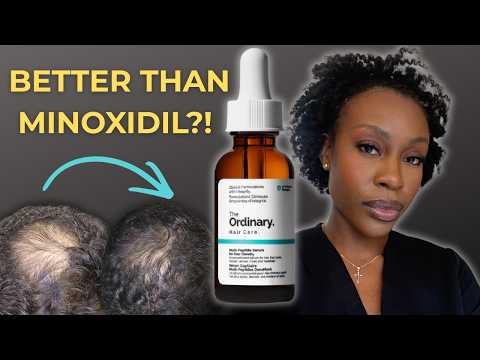
Is This $20 Hair Serum BETTER than Minoxidil?! (Pharmacist Review)
Summarised with Bite · 11 min read
A pharmacist takes apart The Ordinary's Multi-Peptide Serum for Hair Density ingredient by ingredient, then asks the question everyone actually cares about: can a roughly $25 serum really compete with minoxidil? The answer is more interesting than the hype, because the formula is thoughtfully built and some early studies look impressive, but the evidence is still much thinner than the internet makes it sound.
0:00 – 8:16
A cheap serum with a big promise
The video opens with a challenge that instantly raises the stakes: people are claiming a $20 hair serum can replace minoxidil, and the speaker says that as a pharmacist, she had to fact-check it. That framing matters, because it sets up the tension running through the whole review. On one side, there is The Ordinary, a brand known for affordable, ingredient-focused products and transparency. On the other, there is minoxidil, the established heavyweight in hair loss treatment. She starts by explaining why this particular serum gets so much attention. It is marketed for fuller, thicker, denser-looking hair, comes in a 2 fl oz dropper for about 25 bucks, and combines multiple active systems instead of relying on one hero ingredient. That is the unexpected angle here. The serum is not trying to be one miracle molecule. It is more like a team sport, with each player supposedly attacking hair loss from a different direction. The first player is Redensyl. She describes it as working at the root, especially around the parts of the follicle that control the growth cycle. Rather than dropping jargon and moving on, she translates each piece. DHQG, a form of quercetin, is presented as a plant antioxidant that helps wake up hair stem cells and protect them. EGCG from green tea helps calm inflammation and fight free-radical damage. Glycine helps build keratin, the main protein in hair. Zinc supports growth and repair. Put together, Redensyl is meant to support stronger hair at the source. Then she pivots to a new question: even if you stimulate growth, what if hormones are still pushing hair to thin? That leads into Capixyl. Here she introduces DHT, dihydrotestosterone, as one of the main hormones linked to thinning. Capixyl combines acetyl tetrapeptide-3, which may support cells at the base of the follicle, with Biochanin A from red clover, which may interfere with the enzyme that converts testosterone into DHT. The logic is clear and memorable: if DHT helps speed up hair shedding, then reducing its effects might buy the follicle more time. But this is where her pharmacist perspective starts cutting through the marketing. She says the research behind Capixyl is based on lab studies or small clinical trials, and many are funded by the companies that make the ingredient. That sentence becomes the heartbeat of the review. The ingredients sound smart. The mechanisms sound plausible. The confidence level, though, is still limited by the quality of the evidence. She closes this part by introducing Procapil, another ingredient aimed at scalp health, blood flow, and DHT-related thinning. Oleanolic acid from olives may reduce inflammation, apigenin may improve blood flow, and a peptide may support scalp repair. The bigger point is that the serum is trying to create a better environment for hair to stay anchored and keep growing. Still, she repeats the same caution: most of the evidence comes from lab or animal work, not strong human trials.
2 more sections in the app
- 8:16 – 14:28The moment it gets interesting, a direct comparison to minoxidil
- 14:28 – 20:09Final verdict, good formula, weaker proof, worth a patient trial