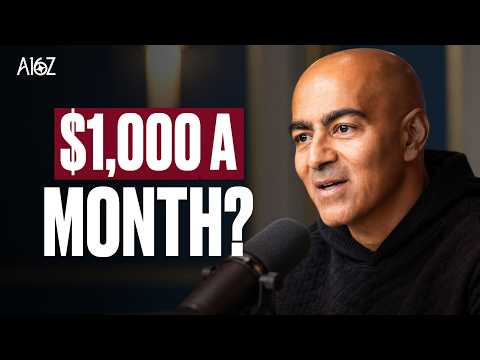
Scott Galloway answers four listener questions, but the episode really turns on one theme: concentration feels exciting, while resilience is built through guardrails. He moves from how fathers should talk to sons about fraternity culture, to how investors can survive an AI or tech bubble, to why AI may reshape enterprise software without killing it overnight, and ends on whether U.S. jobs data can still be trusted.
The conversation every father hopes he never has to improvise
An 18-year-old son joins a fraternity, and suddenly the question is not abstract anymore. Scott does not answer like an outside commentator. He answers like a man with skin in the game, saying he has a freshman at UVA who will likely rush in the spring, and that he himself rushed at 17, partly because he wanted to move out of his mother's home. He remembers moving into a room with three other guys and credits his fraternity with helping him graduate UCLA. That is the unexpected angle at the heart of his answer: fraternities can genuinely help young men find their people inside a giant university, and the data he cites suggests members are more likely to graduate, get better grades, and stay involved with the school later.
Then he turns the camera around and shows the darker film reel. As Interfraternity Council president, he saw what he calls the really bad stuff: a kid falling off a balcony at an SAE rush party and dying, a senior who hung himself after a rejected marriage proposal, another student who took a jet ski out at night while drunk and washed up eight days later. His framing is memorable because it is not just about scandal, it is about "deaths of despair, suicide, and deaths of drunkenness." That makes his advice to fathers concrete. He tells his son the story of his own pledge pinning, where boys were pushed to chug Andre Pink Champagne, one kid's eyes rolled back in his head, and a single older student insisted on the emergency room. Doctors said that if they had let him sleep it off, "he would have never woken up."
From there, Scott says Cornell changed the conversation from just alcohol to character. His approach is simple and repeatable: ask your son what he thinks, then offer a frame. First, empathy. Imagine it is your sister on another campus. Second, future self. Imagine yourself five or ten years from now, with a job, a wife, kids, and professional standing. How would that future version of you want you to behave tonight? He gets highly specific after that. He argues the first time two people are physically intimate, they should both be sober or near sober. He tells his son never to engage in choking, and says multiple male partners with one woman looks like violence to him, not edgy experimentation. He admits he is insecure about parenting and keeps making mistakes, but lands on one clear conviction: if we want better men, fathers need to be more present and talk to their sons every day, even if the sons roll their eyes.
Why diversification is Kevlar when bubbles burst
Scott shifts from parenting to money with a line that sounds almost too neat until he backs it up with scars: you get wealthy through concentration, and you stay wealthy through diversification. He explains why concentration is common early on. If you work in tech, build a company, or buy a house with modest net worth, you are almost forced into one big bet. He gives the example of joining Nike in 2010, rising fast, stacking options, and cashing out in 2022. That path can make a fortune. But if you joined in 2000 and watched the stock eventually end up back where it was in 2013, the emotional experience is completely different. Same company, different timing, and a lot of luck.
Then he makes it personal. "I've been rich three times, which means I've lost it twice." He says he was wiped out in the dot-com implosion because he was all tech, mostly in his startups, and then got hit again in 2008 after rebuilding for seven years, again because he was mostly or all in tech. That is why his current rule is blunt: he tries not to put more than 3% of his assets in any one stock. He admits the place he breaks that rule is real estate, but says he spreads it across regions and keeps leverage low. His most useful line here is that smart people go broke through leverage. A Florida condo may later become a fantastic investment, but if you borrowed 80% against it in 2008 and the value got cut in half, you could not hold on long enough to enjoy the rebound.
He pushes back on a lazy version of diversification too. Owning the S&P 500 feels broad, but he points out that 40% of it sits in just 10 stocks. So true diversification, in his view, means asset classes and geography: stocks, bonds, real estate, plus some exposure to Asia and Europe even after what he calls an American disco party driven by U.S. tech and AI. His metaphor does the work of a whole investing lecture. Diversification is "your Kevlar." When markets fall, you still get shot in the chest, but you survive it. The section ends with the nightmare image that frames the entire episode title. People brag about going all in on Nvidia, but nobody makes YouTube videos about putting $100,000 of a 401(k) into Amazon and waking up with $7,000 after a 90% plus collapse, the kind Amazon and Cisco suffered from 1999 to 2001. His prescription is boring on purpose: low-cost index funds, spread across asset classes and geographies, because boring is what lets you stay in the game.
AI will not kill every software company, but it may swallow their margins, and the state still needs honest numbers
The third question starts with a familiar panic story: OpenAI launches agents that can work across 4,000 applications, and suddenly the old software giants look like dinosaurs hearing footsteps. Scott calls this the SaaS apocalypse thesis and breaks it into three moving parts. First, replacement: if AI agents can do the work directly, companies may stop paying for software built mainly to help humans do it. Second, seat compression: if 1,000 salespeople needed Salesforce before, but a handful of agents can now do much of the work, revenue shrinks because fewer seats are needed. Third, building versus buying: coding agents make custom software cheaper to build, which weakens vendors' pricing power at renewal.
But here comes the reversal. The market panic was partly rational, yet the operating results do not show a clean extinction event. He cites Stripe's index of 72,000 SaaS businesses, which showed year-over-year growth above 30%, and says the software ETF rose 17% in the third quarter, with Salesforce up 46% and Workday up 55%. So what actually changed? In his view, investors cut terminal value. That phrase simply means the market is less sure these firms will remain embedded in customer workflows forever. The cash flows have not collapsed, but the confidence about the distant future has. He adds a useful real-world reason incumbents are sticky: people are used to the interface, the training, the support, the customer relationships, and the idea that if something breaks, there is somebody to sue.
His answer to who wins is not "AI startups" or "incumbents" in a simple way. OpenAI and Anthropic are growing fast, while companies like Salesforce are also selling agents, with Agentforce at $1.5 billion in annual recurring revenue, up 240% year over year. He thinks the bigger shift is from software sold as a tool to services delivered with AI under the hood. He uses taxes and radiology to make that concrete. Instead of selling software to help you do your taxes, an AI-enabled firm may simply do the taxes for you at half the price and try to win 10,000 clients instead of 5,000. Instead of replacing radiologists, AI helps them read three times as many scans, lowers the cost per scan, and can actually increase demand for radiologists who know how to use the technology.
The final question widens the lens from markets to trust. Can we believe White House jobs numbers after turmoil at the Bureau of Labor Statistics? Scott says his instinct is to distrust this administration, but then gives the more nuanced answer. The BLS commissioner was fired after a weak jobs report, a replacement with no government statistics experience was floated and then withdrawn after backlash, and eventually Brett Matsumoto, a career BLS economist with 11 years in government, was confirmed. The reason Scott still leans toward trusting the numbers is structural. The jobs report relies on two separate surveys, outside researchers inspect the household data, employer numbers get checked against unemployment insurance records, and private payroll data from ADP, Bank of America, and Paychex would diverge if the official numbers were doctored. The real danger, he says, is not cartoonish fabrication but institutional suffocation. Response rates have fallen from 66% in 2016 to 35% last December, and inflation-adjusted funding dropped more than 22% from 2010 to 2025. In other words, you do not always corrupt statistics by changing the answer key. Sometimes you starve the people who count.
Keep these ideas with you.
- Diversification is Kevlar
Scott's image is hard to forget: concentration can make you rich, but diversification is the Kevlar that keeps one bad hit from killing you. He says he has been rich three times and lost it twice because he was too concentrated in tech. The lesson is not that losses disappear, it is that with spread-out assets and low leverage, you can take the hit, get back up, and stay in the game.
- Parent with future-self questions
Instead of giving a lecture, Scott says he asks his son what he thinks, then offers a frame. Imagine the person at risk is your sister. Imagine the person judging your behavior is the version of you five or ten years from now, with a career, family, and reputation. That move turns morality from abstract rules into a personal test of empathy and identity.
- The SaaS apocalypse is really a terminal value scare
The surprising point is that AI has not yet blown up software company cash flows the way the headlines imply. What changed is the market's belief that these firms will remain untouchable for a decade or more. In plain English, investors are no longer paying as much for the idea that today's software leaders will own their customers forever.
- Institutions usually erode before they visibly lie
Scott's answer on jobs data is more subtle than simple distrust. He says the numbers are hard to fake because multiple surveys, private payroll data, and outside researchers create cross-checks. But when response rates fall from 66% to 35% and funding drops more than 22%, the bigger threat is that data quality quietly weakens long before an obvious scandal appears.
Turn the ideas into action.
For Parenting Sons in College
Ask scenario questions instead of delivering speeches. Use prompts like "What if that were your sister?" and "How would your future self want you to act tonight?" because they build judgment under social pressure, which matters more than memorizing rules.
For Protecting Wealth During AI Mania
Cap single-stock exposure and reduce leverage now. Scott's own rule is no more than 3% in any one stock, and his stories of losing wealth twice show why bubbles hurt most when concentration and borrowed money amplify the drop.
For Building an Investment Allocation
Diversify across asset classes and geographies, not just tickers. Owning only the S&P 500 can leave you more concentrated than you think, because he notes 40% sits in just 10 stocks, so adding bonds, real estate, and non-U.S. exposure gives you more real shock absorption.
For Evaluating AI and Enterprise Software
Look for service businesses that can use AI to deliver outcomes, not just software vendors selling seats. The bigger opportunity may be firms that do the work itself, like tax preparation or compliance, because AI can lower prices, expand demand, and change who captures the profit pool.
The complete summary: 3 chapters, 4 takeaways and 4 actionable insights.
Summarised with AI by Bite, an AI YouTube video summarizer and podcast summarizer. Timestamps keep the source close; check important details against the original.
Original video on YouTube