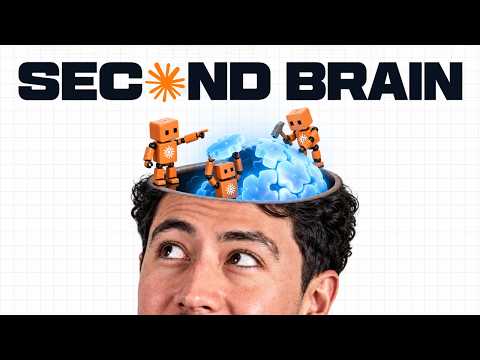
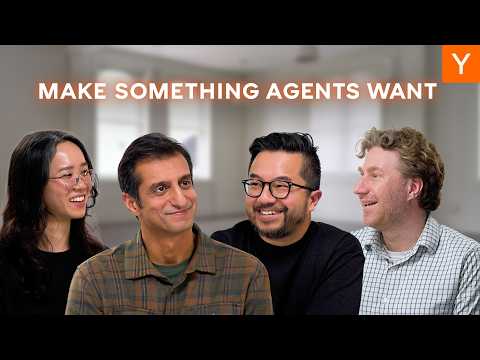
This is a rapid-fire tour of what Claude can do when you stop treating it like an email assistant and start using it like a builder, reverse engineer, researcher, and operator. The real point is not the 31 tricks themselves, it is the mindset shift: we are living through a capabilities overhang where ordinary people can now repair devices, automate systems, run research, and prototype products for almost nothing.
From Ad-Free TVs to Agent Negotiators
It opens with a sharp image: paying for Claude just to write emails is like buying a Lamborghini and leaving it idling in a Walmart parking lot. That metaphor sets the tone for the first stretch of examples, which are all about reclaiming control over devices people normally accept as locked down, ugly, or disposable.
The host starts with a TV full of ads. Someone fed Claude the store listing and asked if it could hack the television and strip the junk out. Claude rebuilt the system so the ads and bloatware disappeared, and the replacement even included a screensaver with a calendar and Stripe payments. That story quickly turns into a pattern. A person wanted a dictation microphone, and instead of buying something off the shelf, Claude picked the parts, designed the circuit, wrote the firmware, and made a 3D-printable case in a couple of days. Another person described the interface they wished their air conditioner had, and a few hours later Claude had produced a polished working controller in the taskbar.
The surprising angle is that Claude is not being presented as a chatbot here, but as a technical co-builder for personal infrastructure. The examples keep piling up: jailbreaking a Kindle, putting it on a private network, turning it into a home dashboard, fixing an ancient Wi-Fi router and boosting speeds by 8X, and converting a cheap Bluetooth receipt printer into a morning email newspaper. One of the most memorable examples is a spare phone attached to a DJI drone, then turned into a cloud-free home security drone linked to an alarm system. Another is an old iPad from 2010 or 2012 that could not run modern apps, but became a smart home wall panel instead.
Then the video shifts from hardware hacks to leverage. A used BlackBerry becomes a cheap physical-keyboard Claude machine. Peter Levels asks Claude to replace software subscriptions and cuts his bills down to eight, with two of those being utilities and taxes, meaning six software bills total. Anthropic then ran a more institutional experiment: 69 employees each got Claude agents that bought and sold goods, and the agents closed almost 200 deals on their own. The stronger models got cheaper pricing, and the weaker ones did not even notice. That lands the section's deeper message: Claude is not just useful for making things, it can bargain, automate, and act with enough competence to substitute for services people are used to paying for.
Security Sweeps, Cancer Research, and Scientific Discovery
The mood darkens when the host moves from clever hacks to surveillance and survival. Someone notices their computer is running hot, asks Claude to build a temperature monitor, and the result is not just a dashboard. It exposes a hidden crypto miner chewing through all 12 cores and pushing the Mac above 100 degrees. Another person connects Claude to the head unit in a Civic and discovers a voice assistant that is always listening, a Bluetooth call recorder, and a backdoor left by the vendor. The same logic gets applied to hotel rooms and Airbnbs, where Claude helps sweep for Wi-Fi cameras, hidden trackers, Bluetooth devices, and spyware. The pitch is no longer convenience. It is self-defense.
Then the video drops its most serious story. A 35-year-old software engineer named Miriam learns she has stage four breast cancer and a rare tumor. Instead of using Claude for a productivity trick, she assembles about 30 Claude agents to research her condition. The output leads to a biopsy plan that a lab at Dana-Farber reviewed and later improved. Anthropic gives her $30,000 in Claude credits. The host is careful not to oversell it as a miracle cure, but the implication is powerful: personalized medical research, once reserved for institutions, is becoming accessible enough for a patient to coordinate herself.
That idea expands outward into biotech and science. The host mentions Cody, who ran a biotech company as a solo operator plus Claude agents for a year and a half before Anthropic bought the company. Then the focus jumps to astronomy. One person had Claude write roughly 1,500 scripts to analyze seven years of NASA telescope data, which helped reveal a planet candidate. The next morning, someone else found two more planets using the same general approach. The concrete lesson is easy to remember: breakthroughs may already be sitting in giant public datasets, waiting for enough synthetic labor to sift through them.
The same pattern appears in genetics. Anthropic pointed around 1,000 Claude agents at a large DNA database and they found a new enzyme similar to CRISPR. That matters because CRISPR is one of the landmark gene-editing tools, and anything adjacent to it could open new paths in medicine, including personalized vaccines. The section keeps asking the same question in different forms: if discovery is now bottlenecked less by intelligence and more by attention, what happens when attention becomes programmable?
From Kids' Games and Bedroom Layouts to New Business Ideas
After cancer research and planet hunting, the video becomes playful again, but the examples are still quietly radical. A four-year-old loves an older game that is not available in French. Claude extracts the voices, translates them, re-voices them with local models, and creates a version the child can understand. A nine-year-old builds a whole website just by talking to Claude Code. The host lingers on the social image of that, a kid showing off a site about favorite books on the playground, because it captures the real shift: skills that used to require years of technical training are becoming conversational.
This turns into a run of examples about simulation and decision-making. One family is unsure whether a bed will fit in their daughter's room, so they give Claude the room size, four photos, and details, and it builds a 3D planner they can walk through. The host says he used a similar workflow himself to preview framed photos of him and his girlfriend around the house, resizing them and seeing how they looked under different lighting before buying. He then extends the same idea to construction, arguing that if you can recreate a house from plans and photos before builders start, you can save huge amounts of time, money, and rework for maybe $5 in tokens.
The final run is about replacing expensive intermediaries with custom tools. Someone in the Czech Republic gives Claude a birth record and gets a family tree stretching back five generations. A frustrated parent sees a baby-tracking app suddenly start charging and simply has Claude build a free alternative. Someone else learns drones by building and flying them in simulation first, making the eventual jump to a real controller feel like arriving with 10,000 hours of practice. Another person compresses 40 hours of developer podcasts into a dense playbook about getting hired, which is a perfect example of the video's hidden theme: Claude is a force multiplier for information density.
The ending then goes broader and more entrepreneurial. Claude helps decompile and revive old games, port titles without emulators, and map about 150,000 games on Steam to find unexplored concept gaps. Out of that comes a strange but memorable game idea, a co-op factory game where one player secretly shorted the company's stock. The host closes by stacking even more examples, market research, fitness, glucose monitoring, genome analysis, and then lands on the core thesis. The world is full of neglected systems, locked-up data, and overpriced software. Claude gives ordinary people a way to pry them open and remake them.
Keep these ideas with you.
- Capabilities overhang
The video's opening Lamborghini line is the whole thesis in one image. Most people use Claude for tiny tasks like email, while others are using the same model to jailbreak Kindles, fix Wi-Fi, write firmware, and analyze NASA data. A capabilities overhang means the tool can already do far more than the average user realizes, so the opportunity belongs to the people willing to ask bigger questions.
- AI as a repair and repurpose engine
One of the most memorable patterns in the video is not invention from scratch, it is resurrection. An old iPad becomes a smart home panel, a cheap BlackBerry becomes a Claude device, a locked Kindle becomes a private dashboard, and a terrible TV becomes ad-free. The deeper lesson is that AI turns obsolete hardware into raw material again.
- Programmable attention beats data overload
The astronomy and biotech stories both hinge on the same idea: there is too much information for humans to inspect manually. Claude writing 1,500 scripts to scan seven years of NASA data and 1,000 agents searching DNA databases are examples of synthetic attention, where the scarce resource is no longer access to data but the ability to comb through it. When attention becomes programmable, discovery speeds up.
- Personalized systems replace generic software
Peter Levels cutting subscriptions, the custom baby-tracking app, and the 3D room planner all show the same shift. Instead of bending your life around mass-market software, you can increasingly generate software around your exact need. That is a big reason the host keeps emphasizing money saved, because customization is no longer a luxury product.
Turn the ideas into action.
For Home Tech Upgrades
Audit one annoying device you already own, like a TV, router, tablet, or printer, and ask Claude to help you repurpose or optimize it before buying a replacement. This matters because several of the video's best examples came from improving existing hardware by 8X or turning dead devices into useful tools for almost no cost.
For Personal Security and Privacy
Run a Claude-assisted sweep on the systems around you, including your computer, car head unit, and temporary lodging networks. This matters because the video shows Claude surfacing hidden crypto miners, always-listening assistants, backdoors, cameras, trackers, and spyware that most people would never spot on their own.
For Learning Faster
Feed Claude the highest-quality source material on a skill you want, then ask it to compress the ideas into a playbook, simulator, or step-by-step curriculum. This matters because the video's examples, from drone simulators to digesting 40 hours of hiring podcasts, show that AI can turn scattered expertise into practice-ready guidance.
The complete summary: 3 chapters, 4 takeaways and 3 actionable insights.
Summarised with AI by Bite, an AI YouTube video summarizer and podcast summarizer. Timestamps keep the source close; check important details against the original.
Original video on YouTube