High Performance
World Cup Penalties Are Decided ALREADY: Penalty Data Genius Reveals Why
Summarised with Bite · 15 min read
This conversation flips the usual way people watch penalties. Geir Jordet argues that the kick itself is often the least important part, because the real battle is decided in the seconds and systems before contact: routines, body language, teammates, timing, goalkeeper disruption, and how a team organizes pressure. The payoff is bigger than football, because the same lesson applies to exams, leadership, and business: pressure is rarely beaten by courage alone, it is managed by preparation, structure, and social support.
2:03 – 10:21
When the foot hits the ball, the real story is already over
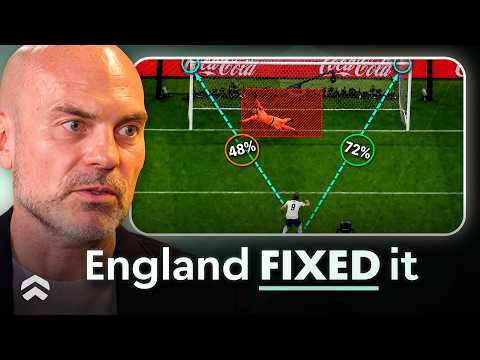
The jolt comes almost immediately. Geir Jordet says, "when the foot hits the ball, I lose interest," and that one line rewires the whole conversation. We have all been trained to stare at the strike, the corner, the save, the miss. Jordet says that is like judging a chess game by the final move. By the time the ball is struck, the most important ingredients have often already done their work: the taker's preparation, the goalkeeper's behavior, the social dynamics, and the player's ability to stay inside a stable routine while chaos swirls around them. His example is Harry Kane, whom he flatly calls the best penalty taker in the world. The case starts with output. Kane scores in the high 80s as a percentage, versus an average "just below 80," so he is roughly 10 percent above the norm. But the deeper reason is process. For almost 15 years, Kane has built a pre-shot routine that is nearly identical every time. Jordet describes it almost like choreography: same stance, same look, same breath, same starting foot, same rhythm. The point is not that it is robotic. The point is that it is stable and robust under pressure, with only small nuances changing. Then comes the twist. Kane built his reputation on what Jordet calls the goalkeeper independent shot, deciding beforehand to go, for example, "high left," then focusing on clean contact, pace, and precision. Kane did that for a decade, and Jordet says no one had more pace or precision. But just before the final manuscript of his book was due, he watched Bayern Munich against Arsenal in a bar in Oslo and saw Kane do something different. Kane slowed, looked at the goalkeeper, waited for movement, then rolled the ball the other way. Jordet says he was "literally on the table jumping," not because Kane scored, but because he had added the opposite technique: the goalkeeper dependent penalty. That matters because unpredictability is the new edge. In Jordet's Premier League study across the past five years, goalkeeper dependent penalties scored about 7 to 8 percent more than goalkeeper independent ones, at least when taken by specialists who know what they are doing. So the old simple answer, just pick your corner and smash it, is no longer enough. The best now can do both, and they can disguise which one is coming so smoothly that, as the host says, you "almost can't see" the difference. That is the unexpected angle of the whole episode: elite pressure performance is not raw nerve. It is a rehearsed system with optionality built in.
3 more sections in the app
- 12:58 – 29:15How England went from penalty trauma to the best process in the world
- 30:18 – 56:11The World Cup final as a battle for territory, timing, and the mind
- 56:44 – 1:15:11What penalties teach about exams, leadership, and staying ahead of pressure
Summarised by Bite, an AI YouTube video summarizer that also works as a podcast summarizer.