Sky News
Will you be able to see it? How to watch the upcoming solar eclipse
Summarised with Bite · 8 min read
This short interview is a practical guide to the UK's upcoming deep partial solar eclipse, with Dr. Jennifer Milard explaining what people will actually see, when the best viewing window hits, and why it will feel dramatic even without full totality. It also turns into a safety briefing and a bonus skywatching plan, because the same night brings the Perseid meteor shower under a dark, moonless sky.
0:00 – 2:06
A thin crescent sun and a half hour that will feel uncanny
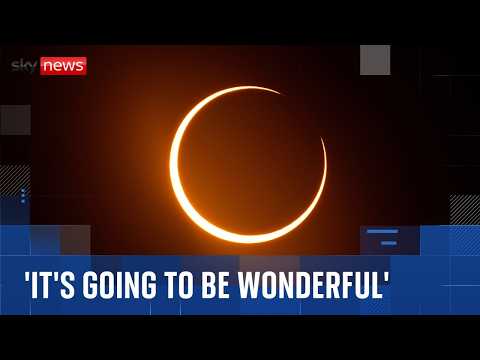
The interview opens with a striking promise: up to 96% of the sun covered by the new moon, not somewhere far away, but visible from the UK. Dr. Jennifer Milard immediately leans into the excitement, calling it "a wonderful event," and then gives the shape of the evening in practical terms. The whole eclipse takes about 2 hours from first contact to last contact, but the part people will remember is much tighter, a "golden half an hour window" when most of the sun is hidden and the spectacle feels most intense. She explains that the exact peak shifts slightly depending on where you are, but it will land around 10 past 7 to 15 past 7 in the evening. Through proper solar eclipse glasses, she says, people should expect to see "just a very thin crescent of the sun" at maximum eclipse. That image matters because it turns an abstract percentage into something visual and memorable. Even though the southwest gets the best coverage, she undercuts the idea that only one region has the real show. In the far northern islands of Scotland, she says, coverage will still be around 88%, which means this is not a niche event for one corner of the country. It is a national sky event with slightly better seats in the southwest. Then comes the comparison people naturally want to make: how does this stack up against the total solar eclipse seen from the British Isles in 1999? Milard draws the line clearly. Totality is special because the moon fully covers the sun and reveals the corona, the sun's outer atmosphere. This eclipse will not give viewers that full reveal. But her unexpected angle is that a deep partial eclipse still triggers many of the same bodily and environmental cues that make total eclipses unforgettable. In other words, you may miss totality, but you do not miss the drama.
2 more sections in the app
- 2:06 – 3:39When the birds go quiet, safety stops being optional
- 3:39 – 5:13A colander, free glasses, and then shooting stars after dark
Summarised by Bite, an AI YouTube video summarizer that also works as a podcast summarizer.