Big Think Clips
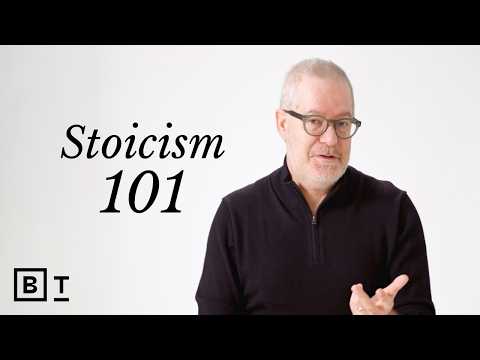
Why Stoicism fails when treated like self-help | Massimo Pigliucci
Summarised with Bite · 13 min read
Massimo Pigliucci argues that Stoicism breaks when people treat it like a grab bag of self-help hacks instead of a full philosophy of life. The real value is not in sounding tough or suppressing feelings, but in learning how to choose good values, act well with other people, and think clearly enough to live a life you will not regret.
0:00 – 4:44
Stoicism starts with a hard limit: your energy is finite
Right at the start, Pigliucci puts a finger on the temptation that makes fake Stoicism so attractive: we want life to be simple, stark, obvious. But he says the Stoics were realists, not slogan merchants. Life is messy, choices collide, and the better move is not to impose your preferred version of reality on the world, but to understand how the world actually works and act inside those constraints. He grounds this in a surprisingly practical idea. Human beings, he says, are "highly social and capable of reason," and that definition shapes what a good life looks like. If you are the kind of creature who reasons and depends on other people, then living well means solving problems intelligently and behaving in a cooperative, pro-social way. That is why the famous Stoic line about focusing on "what is up to us" is not just motivational wallpaper. It is an energy management rule. We have limited time, limited physical energy, and limited emotional energy. If we pour those scarce resources into things where our agency has no effect, we do not become noble, we become depleted. Pigliucci makes this vivid with Epictetus's idea of role ethics. He is never just one thing. He is a son, father, husband, friend, teacher, colleague, citizen. Those roles overlap constantly. You do not get to declare, for one day only, "I am just a colleague and nothing else." That is why obsessing over unactionable news is not merely unpleasant, it is a tradeoff. If reading the news all day makes you depressed about things you cannot influence, then you are less useful to your family, less useful to your friends, less useful to society, and even less useful to yourself. That leads to a quiet but sharp warning about regret. Pigliucci cites Seneca's point that many people start asking what they wanted from life only near the end, when "it's too late." Stoicism, in this telling, is not a mood or aesthetic. It is a way to set priorities early enough that your life does not dissolve into wasted effort.
4 more sections in the app
- 4:44 – 11:03A life worth living is not comfort, it is reason plus relationship
- 11:03 – 14:45Does Stoicism work? The answer is yes, but not in the way self-help promises
- 14:45 – 19:25Why Stoicism fails as self-help: shelf philosophy, blind faith, and the mishmash problem
- 19:56 – 21:59Read the originals, but do not pretend interpretation is optional
Summarised by Bite, an AI YouTube video summarizer that also works as a podcast summarizer.