BBC News
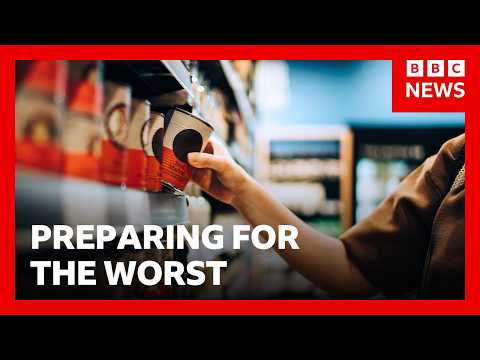
Why is the UK telling people to stockpile? | BBC News
Summarised with Bite · 8 min read
The video explains why the UK government has started urging households to keep three days of emergency supplies, and why that advice has suddenly become politically urgent. It matters because the push is not really about panic buying, it is about a broader fear that modern Britain is too used to instant access to power, food, and communication in a world facing cyberattacks, storms, and infrastructure disruption.
0:00 – 2:41
From awkward advice to a national resilience push
The film opens with a jolt: shelves, tinned food, and anxious voices asking whether the government knows something the public does not. That unease is the real story. The government says it is actually pleased people listened to last week's advice to stockpile, and that instantly raises the obvious question, why now? In Parliament, Security Minister Dan Jarvis tries to ground the campaign in recent reality, pointing to people in Cornwall and elsewhere who were left without power over the weekend. His argument is simple: for those communities, emergency disruption is not a theory, it is lived experience. Daniel Sandford then widens the frame. He says this idea of a public conversation about resilience has been floating around for years, but ministers were nervous about being accused of scaremongering. The unexpected angle is that the campaign is less about one dramatic event and more about a cluster of risks arriving at once. He points to the growing danger of a cyberattack by a hostile state on electricity supply, alongside increasing flooding and fire linked to natural disasters. In other words, the UK is being told to think less like a shopper and more like a household that may need to function alone for a short stretch. Nick Watt sharpens that into two threat buckets. First, extreme weather causing extreme disruption, like storms knocking out power. Second, hostile states, specifically Russia, Iran, and China, with the biggest fear being a Russian cyberattack. He gives a recent example, saying energy infrastructure in Poland was disrupted and asks, who do we think was behind that? Russia. That line turns the conversation from abstract preparedness into geopolitical pressure. By this point, the advice itself becomes clearer. The government's Be Ready campaign recommends up to 3 days worth of food, water, and medication, plus blankets, cash, and battery-powered radios. The deeper message is not really, buy tins. It is, do not assume the supermarket, the card machine, the heating, and the mobile network will always be there the second you need them.
2 more sections in the app
- 2:41 – 5:18What stockpiling looks like when it leaves government briefing rooms
- 5:18 – 7:21Public doubt, private worry, and the comparison with Europe
Summarised by Bite, an AI YouTube video summarizer that also works as a podcast summarizer.