Nischa
Why I'm changing how I invest (before it's too late)
Summarised with Bite · 11 min read
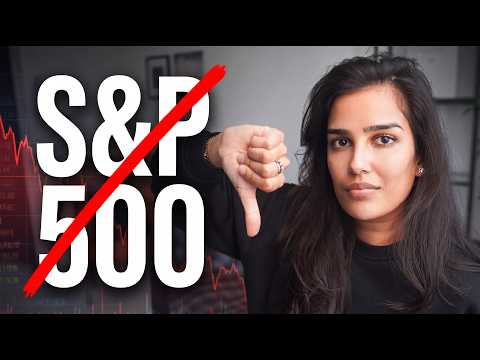
Nisha is not abandoning the S&P 500. She is reacting to a quieter risk inside it: a huge share of the index now rides on seven giant US tech companies, all heavily tied to AI optimism. Her answer is not prediction, but diversification, owning more of the world so her portfolio is built to survive multiple futures, not just the one where US AI winners keep soaring.
0:00 – 3:37
The comfort of the S&P 500, and the risk hiding inside its success
The video opens with a tension most investors can feel immediately: one of the world's most popular index funds is at record highs, yet Nisha is changing how she invests anyway. That matters because the S&P 500 has earned its reputation honestly. She gives the kind of number that makes passive investing feel almost magical: $100 invested at the beginning of 1960 would have grown to about $71,218 today, assuming dividends were reinvested. That is the appeal in one line, simple, patient investing that compounds quietly over decades. She then slows the story down and reminds viewers what the S&P 500 actually is. It is not about guessing the next winning stock. It is a way to spread money across around 500 of the biggest US companies so that when some struggle, others can carry the portfolio. But right after giving the comforting version, she introduces the crack in the narrative. People say "past performance does not guarantee future returns" so often that it can sound like legal wallpaper, but she insists it is the most useful sentence in investing. Not because it is pessimistic, but because it forces humility. No one knows for certain what happens next, no matter how convincing they sound. That leads to the real twist. Many people think buying the S&P 500 means they are broadly diversified across 500 companies. In practice, a surprisingly large amount of that investment is concentrated in just seven names: Apple, Microsoft, Nvidia, Amazon, Alphabet, Meta, and Tesla. She calls them the Magnificent 7, each worth more than $1 trillion. This concentration has been wonderful on the way up because these companies have powered much of the index's growth. But the same feature that helped returns can also magnify damage if one or several stumble. The unexpected angle in her argument is that the very product people buy for safety may now contain more concentration risk than they realize.
3 more sections in the app
- 3:37 – 6:15Why AI excitement could lift markets, and still create danger
- 6:15 – 9:22True diversification means owning more than America's winners
- 9:22 – 11:54Her portfolio rule: make the boring 80% do the heavy lifting
Summarised by Bite, an AI YouTube video summarizer that also works as a podcast summarizer.