PensionCraft
What’s Actually Working in the 2026 Stock Market
Summarised with Bite · 13 min read
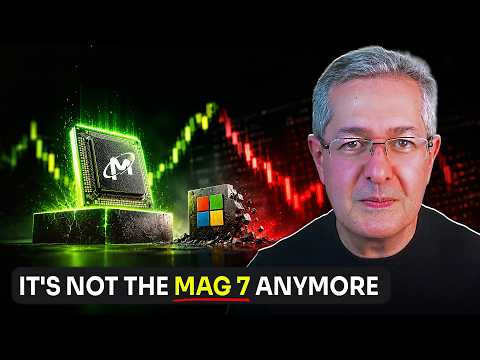
This video argues that the 2026 stock market is not being led by the usual mega-cap tech names people expected. Instead, the real winners are the physical, often "boring" companies supplying AI build-out, memory chips, power gear, cooling, cables, and industrial equipment, which means many investors who fled tech concentration may have accidentally doubled down on AI through value funds. The big question is whether this is the start of a genuine multi-year investment supercycle, or a debt-fueled, priced-for-perfection bubble that breaks if profits fail to catch up with spending.
0:00 – 5:15
The safe harbor that turned into the center of the storm
A small memory company that was not even big enough for the S&P 500 a year ago suddenly rockets more than 500%, and that is where the whole story starts. The host uses SanDisk as the clue that something odd happened in 2026. Investors had spent years worrying that owning a plain vanilla index fund really meant making one giant concentrated bet on the Magnificent Seven. So many did what felt prudent. They tilted toward value, smaller companies, or non-US stocks to escape the AI mania and spread their risk. On the surface, that decision looked smart. Value had a brilliant year. Older, cheaper, unloved companies suddenly woke up. But the unexpected twist is that this was not really an escape from the AI trade at all. It was AI wearing work boots. Wall Street even gave this shift a name, the Halo trade, short for heavy assets, low obsolescence. Josh Brown's line captures it neatly: "you can't hallucinate a power grid or prompt a pipeline into existence." If software becomes easier to copy or pressure on pricing rises, the scarce thing becomes physical infrastructure, power, cooling, cabling, factories, metals, and machines. In the host's phrase, the market moved toward "atoms, not algorithms." That is why companies like Corning, Caterpillar, and Eaton surged while software names such as Salesforce, Intuit, and Workday drifted down. But the host draws an important distinction inside this winning value bucket. One group is directly tied to AI build-out, chips, memory, fiber, power gear, cooling. Those may look safe because they sit in value or industrial funds, but they are actually leveraged bets on AI capex. If the spending slows, they could drop hard. The other group, names like Coca-Cola, Deere, and FedEx, is more genuinely AI-resistant and therefore better as a diversifier. The most striking evidence comes from value index holdings. In one big US value index, Micron makes up over 18% of the fund, Intel nearly 10%, and three of the top four names are chip companies. Yet Micron is under 2% of the broader US market. So the investor trying to get away from tech concentration may have turned a tiny broad-market position into their single biggest bet. The supposed refuge became the very place where the AI storm was strongest.
3 more sections in the app
- 5:47 – 9:24The market engine moved down the supply chain
- 10:58 – 15:07The bull case is real, but the market is charging perfection prices
- 15:07 – 19:19The race between revenue and enthusiasm
Summarised by Bite, an AI YouTube video summarizer that also works as a podcast summarizer.