TEDx Talks
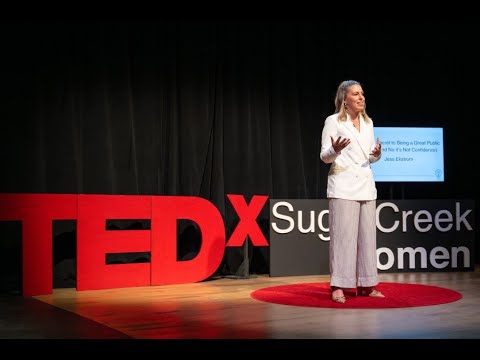
The Secret to Great Public Speaking (No, It's Not Confidence) | Jess Ekstrom | TEDxSugar Creek Women
Summarised with Bite · 10 min read
Jess Ekstrom argues that the real secret to public speaking is not confidence, polish, or having a huge personality. It is shifting attention away from yourself and onto what your audience needs, a move she captures with a simple contrast: stop being a spotlight speaker and start being a lighthouse speaker.
0:00 – 2:08
The Ice Cream Truck Lesson: Why Nerves Shrink When the Message Matters
A kid on a bike is racing through the neighborhood, pounding on doors during dinner, sweaty and breathless, yelling, “The ice cream truck is coming! Smash your piggy banks. Grab your flavors!” That opening memory is not just cute, it is Jess Ekstrom’s whole theory in miniature. As a child, she did not worry about how she looked or sounded because she believed she had critical information other people wanted. In that moment, public speaking was not a performance about her. It was service. That is the first surprising turn in the talk. Most advice about speaking starts with the speaker: stand tall, speak up, take up space. Jess says that advice often backfires because it puts the spotlight back on the one thing already making people anxious, themselves. She places this in a modern context too. With AI on the rise, she says human to human speaking matters even more. A chatbot can help draft an email asking your boss for a raise, but when your boss calls you in to discuss it, you cannot pause the conversation and ask AI for your next line. The room is real, the stakes are real, and your ability to connect matters. She broadens public speaking beyond the stage. It includes giving a presentation, talking to your spouse, even calling your favorite restaurant for takeout because they are not on Uber Eats. That move matters because it reframes speaking as a daily life skill, not a niche talent for extroverts. In her words, public speaking is “the fuse that brings us all together.” It is also often the first step to opportunity, whether that is a multimillion dollar deal, a proposal, or a dream job. The deeper point is simple: fear gets smaller when the message gets bigger. If your mind is fixed on what the other person needs to hear, there is less mental space left for the usual panic spiral of how am I doing?
3 more sections in the app
- 2:08 – 4:13Why Traditional Speaking Advice Makes Fear Worse
- 4:13 – 6:20From Resume Dumping to Real Connection
- 6:20 – 7:51Spotlight vs Lighthouse: The One Question That Changes Everything
Summarised by Bite, an AI YouTube video summarizer that also works as a podcast summarizer.