Wristlock Watches
The science behind watches and status signaling
Summarised with Bite · 9 min read
This video argues that your watch at work is not just jewelry, it is a social signal that can quietly change how bosses, peers, and subordinates judge your competence, warmth, and cooperativeness. The useful twist is that the "best" work watch is often not the most expensive or recognizable one, but the one that sends the right signal to the right people without making everyone else feel you are showing off.
0:00 – 5:08
Why a watch can help you, or quietly cost you
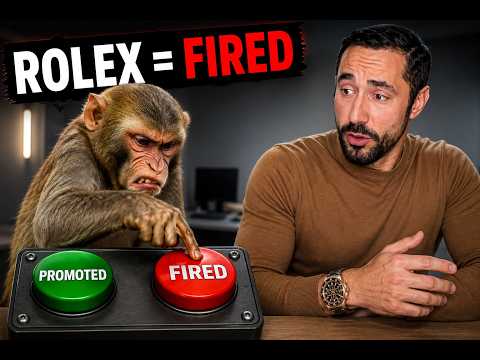
The opening lands like a warning shot: the watch on your wrist might be costing you promotions, money, even your job, and the speaker insists he is not joking. That framing matters because he is trying to drag a very opinion-heavy subject into the world of evidence. His first claim is blunt. Mechanical watches are status signals. Even choosing not to wear one says something. The only thing he treats as close to neutral is an activity tracker like a Garmin or Apple Watch. To make that feel less like watch snobbery and more like psychology, he reaches for a strange but memorable experiment. Rhesus macaque monkeys were given a choice between juice and seeing pictures of other monkeys. The weird result was that they would give up sweet apple juice to look at high-status monkeys, but had to be overpaid in juice to look at low-status ones. His point is simple and sticky: information about status has real value, even to primates. Humans have not escaped that wiring. We just act it out through social media, celebrities, and branded objects instead of monkey photos. Then he brings in the workplace. A paper literally called Rolexes at Work found that luxury watches can help in professions where visible success signals competence, fields like wealth management, law, medicine, architecture, and design. In those worlds, a nice watch can say, this person wins, therefore this person must be good. But that logic flips in jobs where clients may feel they are funding your lifestyle. He gives insurance and some client-facing technical roles as examples. There, the watch can trigger what he calls a Gestalt switch, meaning one visible cue causes people to reinterpret everything else about you negatively. The most surprising data comes from hierarchy. Across several workplace studies, lower-status employees displaying luxury were often judged by higher-status observers as more competent. But when managers and CEOs displayed loud luxury, lower-status employees judged them as less warm. Brand prominence made it worse. Big visible logos looked like deliberate image management and were punished more harshly than subtle wealth. His takeaway is uncomfortable but practical: the higher up you are, the more dangerous flashy luxury becomes.
2 more sections in the app
- 5:08 – 9:19Why flashy signals backfire, and why subtle nonconformity can win
- 9:19 – 16:37The practical rulebook for choosing a watch at work
Summarised by Bite, an AI YouTube video summarizer that also works as a podcast summarizer.