Minority Mindset
The Middle Class Is About To Get Wiped Out (Here's What You Should Do)
Summarised with Bite · 12 min read
Jaspreet Singh argues the middle class is being squeezed by a simple but brutal mismatch: wages rose about 6x since the 1970s, while houses rose 12x and education 20x, and today's comparison is even worse because most households now need two incomes. His answer is not panic or doomsday timing, but building ownership of productive assets, treating speculative bets as small side plays, and understanding that government money printing and intervention can keep markets irrational longer than logic suggests.
0:00 – 4:07
The squeeze is worse than the headline number suggests
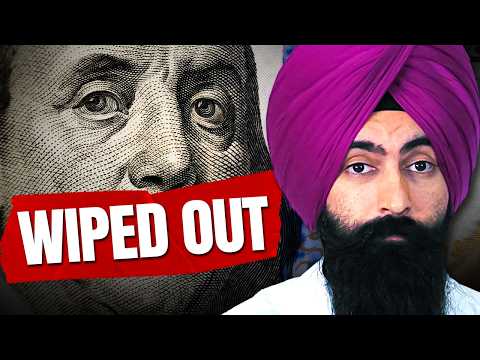
Right out of the gate, Jaspreet takes a bad statistic and makes it feel much more personal. Yes, median income has gone up about 6x over the last 50 years, while cars are up 8x, houses 12x, and education 20x. But then he adds the part he says is even worse: in the early 1970s, the typical household income was built around one working adult, usually the man, while today the median household income is usually based on two people working. That means the comparison is not just wages versus prices. It is one income trying to support a family then, versus two incomes still struggling to keep up now. That is why he says this trend is "more than concerning" and is "going to destroy so many people." His point is not that recessions are unusual. He actually normalizes downturns, listing 2020, 2008, 2000, the 1970s, and the Great Depression as proof that pain is part of the system. The deeper worry is what inflation does over time. In his framing, money printing feeds inflation, inflation hollows out the middle class, and that same process widens the gap between rich and poor because people who own assets benefit while people who only earn wages fall behind. The unexpected angle here is that he does not treat inequality as only a moral or political issue. He treats it like a structural outcome of how money enters the system. If new money lifts asset prices faster than wages, then the people holding stocks, real estate, and businesses move further ahead while everyone else watches life get more expensive. That is the painful realization he keeps pointing to. Not simply a recession, but a society where working harder no longer closes the gap. When Mario raises the Ray Dalio style concern about instability, Jaspreet agrees in principle but keeps the timeline fuzzy. It will break somewhere if money printing keeps going, he says, but no one knows when. His analogy is blunt: you can worry about dying every day because one day it will happen, or you can live in a way that extends and improves your life now. That becomes the logic for the rest of the interview. Do not obsess over predicting the collapse. Prepare for a world where the squeeze is real and ownership matters more than salary alone.
3 more sections in the app
- 4:42 – 13:02What to do when the system feels fragile: own things, do not just earn dollars
- 13:32 – 15:03The dollar is under pressure, but the collapse story gets exaggerated
- 15:34 – 20:16Markets are not just about earnings anymore, they are about power
Summarised by Bite, an AI YouTube video summarizer that also works as a podcast summarizer.