TEDx Talks
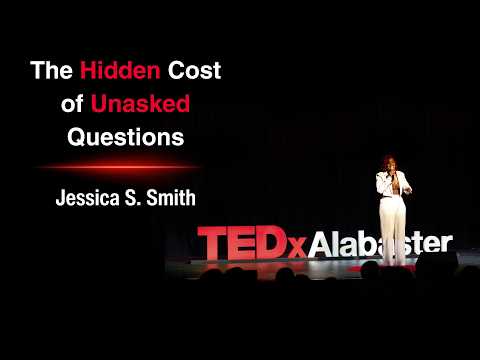
The Hidden Cost of Unasked Questions | Jessica S. Smith | TEDxAlabaster
Summarised with Bite · 7 min read
Jessica S. Smith turns a small childhood moment into a big idea: when questions are punished, curiosity does not disappear, it goes underground and starts charging interest in the form of anxiety, self-doubt, and missed opportunities. This talk matters because she shows that the real damage of unasked questions is not just ignorance, it is the life you do not get to live, and she offers a practical way back through safe spaces where words can land.
0:01 – 4:18
When Curiosity First Became Dangerous
An eight-year-old hears an adult mention they eloped, catches an unfamiliar word, and does what curious kids do, she starts to ask what it means. She never gets to finish. The response is immediate and sharp: “Didn't I tell you not to say another word? You're going to learn to listen to me.” That single moment becomes the hinge of the talk. Jessica is not describing a cute childhood misunderstanding. She is describing the instant her relationship with questions “turned,” when curiosity stopped feeling natural and started feeling risky. She widens the lens by asking the audience to revisit their own body memory around questions. Do you get nervous? Can you breathe? Do you remember a question you asked and never got answered, and who you asked it to? Those prompts matter because her argument is not only intellectual. It is physical. Questions live in the throat, the chest, the pause before speaking. She connects her story to a familiar classroom scene: a teacher says there is “no such thing as a dumb question,” but the room's reaction tells a different story. One look of disgust can teach silence more effectively than a lecture. That is the unexpected angle of this section. The problem is not merely that people lack information. It is that they learn a survival strategy. Jessica says this was the moment when “curiosity felt unsafe,” and her thoughts started feeling less like a gift and more like a liability. What began as one punished question hardened into self-doubt and hesitation. By the time she asks, “How is your relationship with curiosity? When did it alter?” the talk has shifted from autobiography to diagnosis. She is inviting the audience to see silence not as personality, but as history.
2 more sections in the app
- 4:18 – 9:28The Interview Where Her Voice Left the Room
- 9:28 – 13:10Building a Safe Place for Questions to Land
Summarised by Bite, an AI YouTube video summarizer that also works as a podcast summarizer.