TLDR News Global
The Gen-Z Unemployment Crisis Explained
Summarised with Bite · 7 min read
This video explains why youth unemployment is rising again worldwide just after what looked like a strong post-pandemic recovery. The key takeaway is unsettling: the problem is not just a weak economy, but a job market that increasingly shuts young people out through higher experience demands and the erosion of traditional entry-level roles by AI.
0:00 – 2:36
The rebound ended faster than it seemed
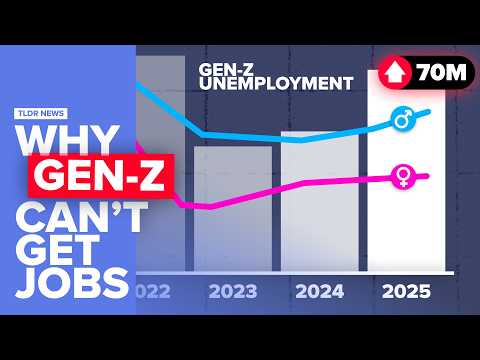
The video opens with a blunt reassurance that is really a warning: if a young person feels alone in struggling to find work, they are not. The new ILO report says around 67 million people aged 15 to 24 are unemployed worldwide, or 12.4% of that age group. That is up from 12.3% in 2023, which means 2 million more young people are facing unemployment in just two years. The surprising part is not only the size of the problem, but the timing. In 2023, youth unemployment and the broader NEET rate had hit their lowest point in 20 years after recovering from the pandemic shock. What looked like a comeback now appears to have been the high-water mark. Then the video widens the lens. The unemployment rate only counts people without a job who are actively looking, so it misses those who have given up. That is why the NEET rate matters so much. It captures young people who are neither employed nor in education or training, including those who stopped searching out of frustration or hopelessness. That figure has risen by 9 million to 257 million, about 1 in 4 young people. In other words, the problem is larger than the headline unemployment rate suggests. The most jarring contrast comes next. Youth unemployment is rising in many places, especially North Africa, North America, and North, South, and Western Europe, even while the overall unemployment rate edged down slightly. That means the labor market is not collapsing equally for everyone. A young person is now four times more likely to be unemployed than an adult aged 25 or over. That gap sets up the video's core question: why are younger workers being singled out when the broader jobs picture looks relatively stable?
2 more sections in the app
- 2:36 – 4:10Why young workers get hit first in a shaky economy
- 4:10 – 6:46Experience inflation and AI are squeezing the first rung of the ladder
Summarised by Bite, an AI YouTube video summarizer that also works as a podcast summarizer.