Stripe Developers
The future of agentic payments
Summarised with Bite · 9 min read
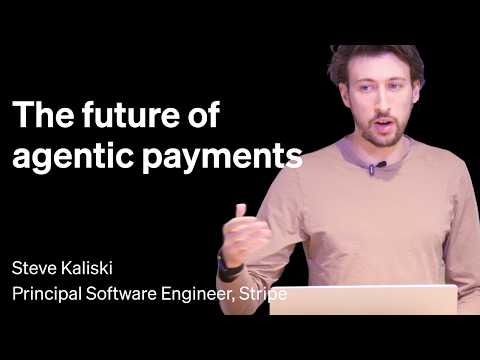
Steve from Stripe walks through a simple but important shift: software agents are starting to shop, pay, and call paid APIs on behalf of people. The talk matters because it shows the plumbing needed to make that safe, from reusable payment credentials with hard spending limits to a machine-readable checkout flow and even pay-per-request API payments.
0:00 – 6:35
From buying a toy in ChatGPT to inventing a payment method agents can safely carry
A toy for a nine week old daughter is the opening scene, and that choice is clever because it makes the whole idea feel ordinary before Steve reveals how strange it actually is. Inside ChatGPT, he searches Etsy, finds a product, and instead of being kicked out to the seller's website, he gets the option to pay right there in the app using the payment method already on file with OpenAI. It looks almost too normal. No flashy sci-fi interface, no dramatic robot takeover, just a button. But Steve's point is that the boring-looking button hides the hard part: how does an agent discover something, hold payment credentials locally, and then pass enough payment authority to a seller without exposing the raw underlying details? That question leads to the first thing Stripe built, a shared payment token. Steve frames the bad version first: give the seller your 16 digit card number and hope everything goes well. That falls apart immediately once you remember that many people do not pay with cards, and many payment methods cannot be reduced to a string of digits at all. Stripe's answer is to securely package any supported method, more than 150 of them, into something the seller can use without ever receiving the raw credential. In the demo, the agent's Stripe account has already collected a test Visa card. Steve creates a token that says this seller can charge up to $25, in a set currency, before the end of the month. On the seller side, the token drops into the existing PaymentIntent flow, which is important because it means sellers do not need an entirely new payment stack just to serve agents. The seller charges $10, and it works. Then Steve changes the amount to $50, double the approved limit, and the charge is declined. That is the memorable part of the demo because it proves the controls are not just polite suggestions. Stripe enforces them. He also makes a subtle but important risk point. Since the agent collected the payment method, some fraud signals, like browser fingerprint or how the card was entered, live with the agent rather than the seller. So Stripe tries to carry those insights across too, giving the seller something closer to the risk visibility they would have had if the customer had checked out directly on their own site.
2 more sections in the app
- 6:35 – 9:51Teaching sellers to talk to robots instead of forcing robots to click around websites
- 9:51 – 14:16A penny per API call: when the buyer is not a shopper but a piece of software
Summarised by Bite, an AI YouTube video summarizer that also works as a podcast summarizer.