TEDx Talks
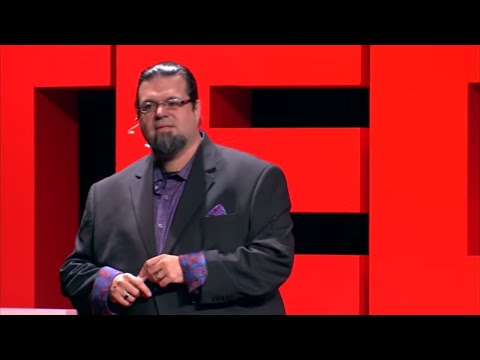
The Five Laws of Cybersecurity | Nick Espinosa | TEDxFondduLac
Summarised with Bite · 8 min read
Nick Espinosa turns cybersecurity into plain English by arguing that online danger follows a few simple, almost unbreakable rules. The talk matters because it replaces vague fear with a practical mental model: assume vulnerabilities exist, assume people will exploit them, and learn to spot where trust and innovation create openings.
0:00 – 3:40
Cybersecurity as a Common Language
He opens with a surprisingly human image, 6,900 languages spoken across the planet, from tiny communities to entire continents. Then he narrows the lens to a different kind of language, the one billions of people use without ever naming it: internet protocols, social media systems, and even emojis. His point is unexpected and clever. The largest culture on Earth may not be tied to a country at all, but to the internet itself, with 7.6 billion humans on Earth and around 3.6 billion of us online. That setup matters because it explains the real problem. We share digital spaces, but we do not share a clear understanding of cyber risk. Espinosa says that outside of hardcore cybersecurity and IT people like himself, most people do not understand “the language that is nerd.” So he frames his job as being a “nerd-to-English translator.” That line does more than get a laugh. It sets the theme for the whole talk: cybersecurity is often treated like dark magic, when it is really a set of predictable behaviors. His first two laws follow naturally from that translation. Law number 1 is blunt: “If there is a vulnerability, it will be exploited. No exceptions.” He makes it memorable by jumping from the first bank, where surely someone immediately thought, “I want to rob that,” to the first computer bug, after which hackers started looking for ways around systems, rules, and safeguards. He makes the idea concrete with examples ranging from someone covering a license plate to dodge an automatic tollbooth, to malware used to derail an illegal nuclear weapons program in the mid-2000s. The surprising angle is that hacking is not some rare niche behavior. It is a universal human impulse to test boundaries, so common we even softened it into the phrase “life hacking.” Then comes law number 2: “Everything is vulnerable in some way.” Here he pushes against the comforting idea that big budgets or familiar devices equal safety. Massive corporations spend millions on cyber defense and still suffer breaches. Even computer processors, the invisible engines most people assume are safe and boring, turned out in early 2018 to carry serious vulnerabilities. His message is hard but clarifying: stop asking whether something can be hacked, and start asking how.
2 more sections in the app
- 3:40 – 4:42The Trust Trap
- 4:42 – 6:48Innovation Creates New Doors, and Hackers Try Every Handle
Summarised by Bite, an AI YouTube video summarizer that also works as a podcast summarizer.