TEDx Talks
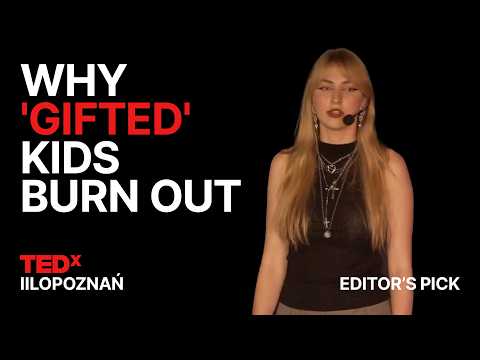
The burden of the 'gifted kid' label | Aleksandra Żołędziewska | TEDxIILOPoznań
Summarised with Bite · 9 min read
A former 'gifted kid' reveals how praise for innate intelligence creates fragile perfectionism, leaving talented students terrified of struggle and unprepared for real-world challenges. The talk exposes why early academic success often leads to burnout and argues for teaching growth over validation.
0:11 – 2:56
The Question That Defined Everything
Every year, the speaker's mother asked the same question: Who is the smartest kid in your class? When she first heard it as a young child, she didn't understand what 'smartest' meant. Her mother's answer was simple: the kid with the highest grades. That definition stuck, and over time the speaker absorbed labels like 'genius,' 'talented,' and 'gifted' until they became her identity. She believed intelligence wasn't something you built through effort but something you simply were. This belief felt empowering at first, a mark of specialness that set her apart. But the foundation was fragile. The speaker eventually found herself falling behind, losing motivation, and asking what she'd done wrong. She's not alone in this pattern. The term 'gifted kid burnout' has spread across social media, often as a joke, but resonates deeply because it captures the moment when praised brilliance becomes a distant memory and only exhaustion and self-doubt remain. The question becomes urgent: why are talented children, supposedly society's hope for a brighter future, so vulnerable to burning out? The answer lies in the toxic expectations that come with the gifted label and how those expectations warp a child's sense of self from the inside out.
4 more sections in the app
- 2:56 – 4:51When Your Worth Becomes a Grade
- 4:51 – 7:23The Collapse of the Fixed Mindset
- 7:23 – 9:27When 'Smart Enough' Means No Support
- 9:27 – 12:12Rebuilding Intelligence as a Muscle
Summarised by Bite, an AI YouTube video summarizer that also works as a podcast summarizer.