TED
The Brain-Changing Benefits of Exercise | Wendy Suzuki | TED
Summarised with Bite · 11 min read
Wendy Suzuki turns a familiar health tip into something much more urgent: exercise is not just for your body, it is one of the fastest ways to improve your mood, focus, and memory, and one of the best long-term investments you can make in your brain. The talk matters because she is not speaking as a generic fitness advocate, but as a neuroscientist who accidentally ran an experiment on herself and then followed the evidence all the way into the lab.
0:12 – 3:57
A neuroscientist puts her own brain on the table
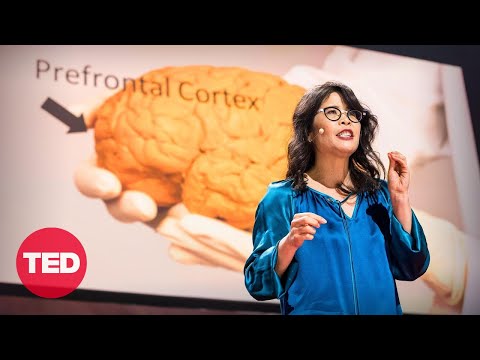
She begins with a dare disguised as a question: what if one thing you could do right now would immediately improve your mood and focus, and also help protect you from depression, Alzheimer's disease, and dementia? The answer is not a pill or a brain-training app. It is physical activity. Suzuki quickly grounds the claim in the brain itself. She points to the prefrontal cortex, the strip behind your forehead that helps with decision-making, focus, attention, and even personality. Then she shifts to the hippocampus, buried deep in the temporal lobe, the structure that lets you form and hold onto long-term memories for facts and events. She frames the mystery in human terms rather than textbook terms: how can a moment as brief as your first kiss, or the birth of your first child, leave a trace that lasts a lifetime? That question drove her early career. She wanted to record the activity of individual brain cells in the hippocampus and understand how tiny bursts of electrical activity become memory. Then the talk takes its unexpected turn. At the very moment her career was thriving, with data "pouring in" and her reputation growing, her life outside the lab had quietly collapsed. She says she had no social life, spent too much time alone in a dark room listening to brain cells, did not move her body, gained 25 pounds, and only later realized, "I was actually miserable." That confession matters because it changes the talk from abstract science into a personal before-and-after story. The expert on memory had missed what was happening in her own life. The turning point was almost embarrassingly concrete. She went on a river-rafting trip alone and came back with a simple vow: "I'm never going to feel like the weakest person on a river-rafting trip again." That sentence is the hinge of the whole talk. A world-class neuroscientist did not start exercising because she had perfect willpower or a grand theory. She started because one vivid experience made the cost of staying the same impossible to ignore.
3 more sections in the app
- 3:57 – 6:39The accidental self-experiment
- 6:39 – 10:19What one workout does, and what many workouts build
- 10:19 – 12:49The minimum dose, and a one-minute proof