The Diary Of A CEO
Sleep Doctor: If You Wake Up At 3AM, DO NOT Do This!
Summarised with Bite · 26 min read
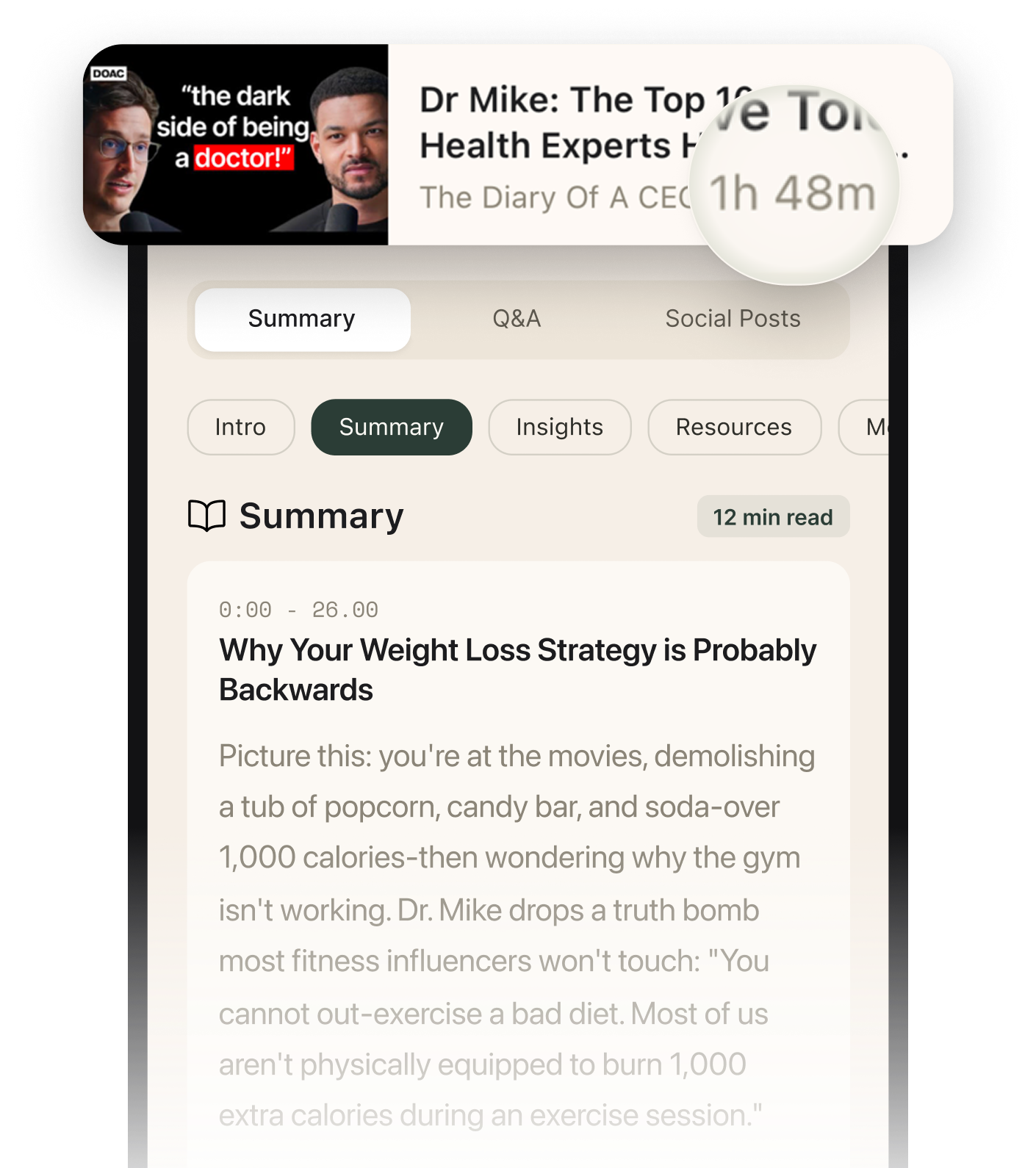
This is a long, practical masterclass on sleep from Dr. Michael Breus, who argues that most people are damaging sleep in fixable ways, from mistiming caffeine and alcohol to misunderstanding melatonin, insomnia, and sleep apnea. The real value is not just the tips, but the framework: sleep is driven by biology, rhythm, temperature, heart rate, and behavior, and once you understand those levers, you can stop guessing and start fixing what is actually keeping you awake.
0:00 – 18:37
Why sleep changes your life, and why timing matters more than most people realize
He opens with a deceptively simple claim: change someone’s sleep, and you change their life. That is the lens for everything that follows. Dr. Michael Breus explains that after 26 years as a practicing sleep specialist, he has become less interested in rare disorders alone and more interested in what he calls “disordered sleep,” the everyday habits that quietly wreck people’s nights. That is the unexpected angle here. He is not just treating apnea, narcolepsy, and insomnia. He is trying to catch the easy mistakes, the coffee timing, the late alcohol, the bad wind-down routine, the bedroom setup, that millions of people repeat without realizing the cost. He frames sleep as being governed by two systems in the brain: sleep drive and sleep rhythm. Sleep drive works like hunger. The longer you stay awake, the sleepier you become, largely because adenosine builds up. He uses that biology to explain one of the most memorable tactical ideas in the conversation, the “nappa latte.” Drink black coffee quickly, then immediately take a 25 minute nap. The nap burns through some of the accumulated adenosine, while the caffeine takes about 25 to 30 minutes to kick in. When it does, it slots into the same receptor area and blocks new adenosine, giving what he says is about four hours of better alertness. He says he uses it with CEOs who have to function after a terrible night. Then he zooms out to circadian rhythm, your internal timing system, and introduces the concept that organizes much of the rest of the episode: chronotypes. These are not just cute labels like early bird and night owl. He says there is a genetic basis, linked to the PER3 area, and that knowing your type helps you line up daily activities with when your body naturally produces melatonin, cortisol, adrenaline, and other hormones. That is why he thinks chronotype matters for productivity, learning, relationships, coffee timing, and even sex. He gives an early example that sticks because it is so concrete. Most people are intimate around 10:30 to 11:30 at night, but hormonally that is often the wrong time. At that hour, melatonin is rising and the hormones most useful for sex are lower. Morning, by contrast, often has a better hormonal profile. It is a funny moment, but his point is serious: your body is already running a schedule. If you understand it, you can stop fighting it.
6 more sections in the app
- 18:37 – 30:01The four chronotypes, and why your schedule may be punishing you for being normal
- 30:01 – 56:51Why parents, alcohol, late meals, and middle of the night panic quietly sabotage sleep
- 56:51 – 1:11:34The hidden epidemic of sleep apnea, and the many ways people mistake it for something else
- 1:11:34 – 1:39:56Insomnia, sleep pills, melatonin mania, and the difference between feeling sedated and actually sleeping well
- 1:39:56 – 2:00:00Jet lag, magnesium, wearables, dreams, and the strange ways sleep solves problems you cannot solve awake
- 2:00:00 – 2:24:10The bed itself: morning routines, masks, room air, sex, arguments, and building a bedroom that actually helps you sleep