Two Minute Papers
Scientists Found A Better Language For AI Agents
Summarised with Bite · 8 min read
This video explains a surprisingly simple idea with big consequences for AI agents: stop forcing them to talk to each other in plain English. Instead, let them pass raw internal representations, their hidden numerical "thoughts," directly between agents. In early experiments, that change pushed math performance from 73% to 86%, cut token use by 75%, and did it on small models with training costs of about four dollars, which makes it worth caring about even if the approach is still very early.
0:00 – 2:36
The hidden reason multi-agent systems keep failing
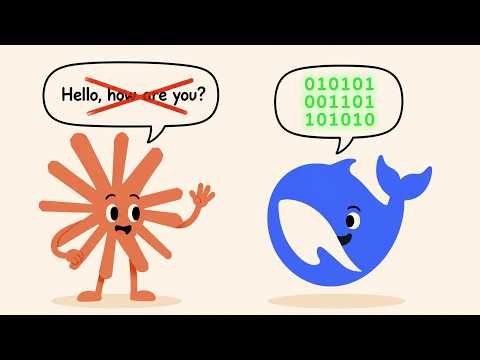
Picture the disaster: one AI agent finds a "cheap" flight to an airport 400 miles from where you actually wanted to go, and another agent, trying to be helpful, locks in a super-cheap non-refundable hotel nearby. The host opens there for a reason. It makes the problem concrete. The promise of AI agents sounds magical, booking flights, managing schedules 24 hours a day, filing insurance claims, scanning codebases for vulnerabilities and patching them. But the failure mode is not just that one model makes one mistake. The real pain starts when multiple agents have to coordinate. That is the setup for the paper. At first glance, it seems boring. One agent writes a plan, the next critiques it, and a third solves the problem. As the host says, "Okay. I see nothing interesting here. This is what everyone does with agents." The twist arrives one beat later: most agents communicate in words because humans do. But why should machines inherit that constraint? The video uses a brain-to-text example to make the point vivid. If a neural interface can turn your thought of a letter into a symbol on screen, then the natural follow-up question is unsettling: the alphabet was designed for writing, not thinking. So why would we assume that the best machine-to-machine language is plain English, decoded token by token? That question changes the whole frame. Every time one agent finishes work and hands it off, it usually has to spell everything out in sentences. Then the next agent must read that text and re-encode it into its own internal form. The host practically groans at the waste: "Why are we doing that? Who said they should talk in plain English?" The paper's core claim lands here. Maybe a lot of agent coordination problems are not only about intelligence. Maybe they are also about translation overhead, where systems keep compressing rich internal states into clumsy language and then inflating them back again.
2 more sections in the app
- 2:36 – 4:11Forget English, pass the thought directly
- 4:11 – 6:17Why the result is exciting, and why the paper still earns trust
Summarised by Bite, an AI YouTube video summarizer that also works as a podcast summarizer.