James Shack
Once You Understand This, You'll Stop Working Past 57
Summarised with Bite · 9 min read
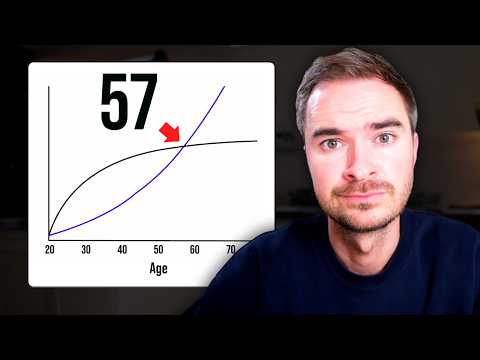
This video uses a deceptively simple money gamble to explain why many people keep working long after they already have enough. The core idea is that around 57, money often starts buying less real satisfaction while time, health, and freedom become dramatically more valuable, so the real risk is not retiring too early, but retiring too late.
0:00 – 4:14
The gamble that exposes how you think about enough
A choice between a guaranteed £10,000 and a 25% chance at £50,000 sounds like pub trivia, but it opens a trap door under the way most people think about retirement. The speaker says about 80% of people pick the guarantee, and his own poll came back at 84%, even though the expected return of the gamble is higher. That mismatch is the whole story in miniature. On paper, £50,000 times 25% beats £10,000. In real life, people still flinch. Why? First, because of what Daniel Kahneman and Amos Tversky called the certainty effect. Our brains overvalue outcomes that feel locked in. Add loss aversion on top, the finding that losing hurts roughly twice as much as an equivalent gain feels good, and suddenly the safe option feels emotionally obvious even if it is mathematically weaker. He reframes the gamble in a sharper way: you are effectively risking £10,000 for a chance at more, and the possibility of walking away with nothing feels unbearable. But he does not leave it there as a story about irrationality. He adds a perfectly rational twist: the right answer depends on circumstances. For one person, £10,000 clears credit card debt and removes panic. For another, it barely changes anything. That is the bridge to retirement. If a guaranteed amount would fully fund the life you actually want, then gambling for more stops being sensible. At that point, extra money is no longer solving a real problem. The catch is that this line keeps moving. In a thought experiment, it is easy to say, yes, if I had another £100k or £500k I would stop tomorrow. But when people finally reach that number years later, their definition of enough often shifts. They blow straight past it. That happens because the mind assumes money works in a straight line, more money, more happiness, when in practice its value bends and flattens. That illusion sets up the rest of the video: if the relationship is not linear, then the decision to keep working is probably not as rational as it feels.
2 more sections in the app
- 4:46 – 8:57Why more money stops solving the problems you actually feel
- 8:57 – 14:38Why 57 becomes the tipping point