Minority Mindset
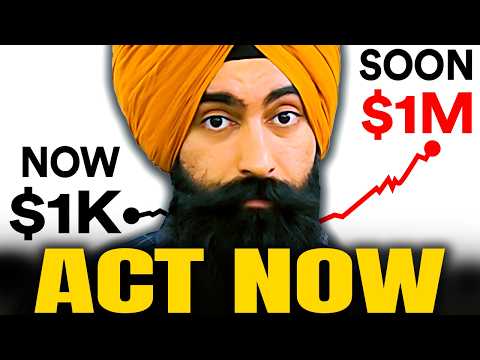
MASTERCLASS - Once You Save $1,000 Do These 5 Things ASAP
Summarised with Bite · 15 min read
This video starts with a simple challenge, what should you do after saving your first $1,000, then turns into a full blueprint for building wealth. The core message is that money alone does not make you richer, systems do: learn faster, think bigger, automate investing, protect your time, and build cash flow so your life is not dependent on every paycheck.
0:00 – 4:36
Your first $1,000 is not spending money, it is leverage
The video opens with a jab at the most common mistake: you get a thousand dollars and immediately think about a watch, a flex, a reward. His point is that the same $1,000 can either disappear into something that makes you look rich, or become the seed that changes how you earn, think, and invest. That framing matters because the whole talk is really about identity before tactics. Are you someone who consumes money, or someone who deploys it? His first move is unexpectedly old-school: books. He argues that if you want an MBA-level education without the MBA price tag, read 25 books. Not randomly, but in a sequence: 5 on money management and investing, 5 on starting a business, 5 on scaling a business, 5 on managing people, and 5 entrepreneur biographies. That structure is doing two things at once. It teaches mechanics, and it rewires your sense of what is normal. He uses his own story here. Rich Dad Poor Dad was, in his words, the first book he ever read voluntarily cover to cover, and it exposed him to passive income and wealth-building for the first time. Then he recommends Total Money Makeover for getting out of debt and treating money like a tool, and The Creature from Jekyll Island for understanding how money and the Federal Reserve work. The surprising claim is not just that books teach you. It is that after 6 months, 9 months, or 12 months of reading those 25 books, you will literally see money differently. He is saying the first return on your $1,000 is not financial. It is cognitive. Before you can multiply money, you need a new mental operating system. That sets up his second move, upgrading your goals. He tells a story about talking with a contractor whose goal was to become a licensed truck driver. He pushed back: why stop there, why not think about owning a trucking business? That small conversation changed the man’s frame. To make the lesson stick, he uses the flea-in-a-jar example. Leave the lid on long enough and even after you remove it, the fleas stop trying to escape. His point is blunt: people often keep living under limits that no longer exist. He connects that to his own life too. He once thought making $100,000 a year meant he would never worry about money again. Then he hit it, realized it was possible, and his ceiling moved. The big lesson is that bigger financial outcomes start as permission, not math.
3 more sections in the app
- 4:36 – 37:14The real divide is not rich versus poor, it is spending versus investing
- 10:44 – 47:19Your time is capital too, and cash flow changes how retirement feels
- 1:42:34 – 2:15:36Wealth gets real when you can save fast, earn more, and stop waiting for rescue
Summarised by Bite, an AI YouTube video summarizer that also works as a podcast summarizer.