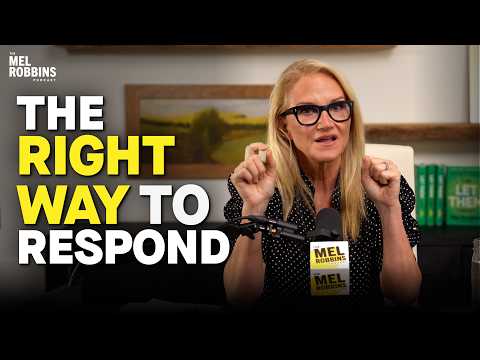
Mel Robbins
Let Them: How to Handle Difficult People & Take Back Your Peace and Power
Summarised with Bite · 10 min read
Mel Robbins takes her popular "let them" idea and makes it practical for real relationships: the parent who will not take care of themselves, the adult child you cannot motivate, the friend who wounded your confidence, the partner who keeps leaving a mess. The core message is surprisingly freeing: peace does not come from getting difficult people to act right, it comes from changing your role in the dance by using a simple framework, me, we, and them.
0:00 – 15:59
Stop trying to rescue people who will not change
The episode opens with a pressure cooker question that clearly has been haunting Mel's audience: what are you supposed to do when the difficult person is not some stranger, but your mother, your son, your spouse, your family? She immediately flips the usual instinct on its head. The trap is not just that the other person is frustrating. The trap is that you are spending your life trying to make them different. She says bluntly that in every bad dynamic, two people are contributing to the dance, and that includes people pleasing, walking on eggshells, overexplaining disrespect, and pouring more and more effort into a relationship that keeps giving pain back. Her first example makes the idea land emotionally. Teresa is caring for a 68 year old mother with diabetes and liver disease who ignores medical advice, wastes the healthy meals Teresa cooks, and even cancels doctor appointments after Teresa has taken time off work. Teresa says the brutal sentence many caregivers secretly feel: "I love my mom, but I don't want to be around her." Mel does not answer with guilt or with a lecture about trying harder. Instead, she introduces a three step framework: me, we, and them. "Me" means starting with your own reality. Teresa is not failing because she feels exhausted. Her exhaustion is evidence that the situation is hard. Mel urges her to create space for support, from a therapist, a friend, or someone who understands caregiver strain, because carrying all of that emotional weight alone is unsustainable. "We" means having an honest conversation about the relationship itself, not another lecture about diet, medications, or appointments. Mel borrows Terry Real's simple script: this is what happened, this is the story I'm telling myself, and this is what I need from you. That formula matters because it shifts the talk from blame to truth. Then comes the hardest part, "them." If Teresa's mother is capable of making her own choices and continues to reject help, Mel says Teresa has to let her. Not abandon her, but give her "the dignity of her own experience." That phrase is the unexpected angle of the whole episode. Letting someone face the consequences of their choices is not cruelty. Sometimes it is the only way to stop sacrificing your own life to decisions you do not control. Mel repeats the line that becomes the backbone of the section: if you change nothing, nothing changes. But if you change one thing, how you show up, everything could change.
2 more sections in the app
- 17:01 – 29:24Encourage instead of judging, and stop letting other people run your emotions
- 29:24 – 45:01Replace 'they should' with 'are they capable?'
Summarised by Bite, an AI YouTube video summarizer that also works as a podcast summarizer.