Vicky Zhao
How to Think Fast Before You Speak: Framework Thinking
Summarised with Bite · 8 min read
Vicki argues that people who seem naturally quick on their feet are usually not improvising from raw intelligence, they are pulling from mental frameworks. The video shows how a simple structure, like revenue equals units times price, lets you answer messy questions fast, then explains two ways to build your own library of frameworks so you can speak with more clarity and control.
0:00 – 2:58
Why quick thinking is really structured thinking
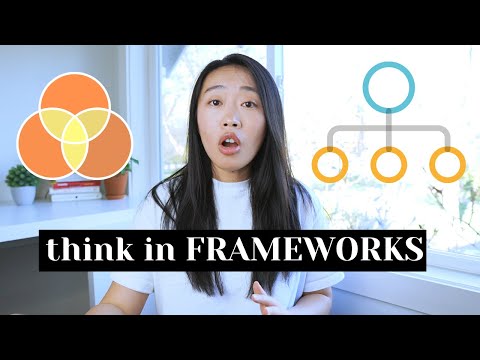
The video opens with a familiar frustration: some people always seem to know what to say, even when a question lands out of nowhere. Vicki starts by puncturing the flattering myth that this is mostly IQ. Her claim is more practical and more hopeful: fast thinking is trainable, and the hidden skill is knowing what structure to reach for before you speak. She ties this back to her earlier idea, “steer, don’t follow.” When a conversation suddenly veers in an uncomfortable direction, the problem is often not courage. It is that you do not know what to steer toward. If your mind is blank, you get dragged along by the other person’s framing. That is the curiosity gap she sets up: what gives you a direction quickly enough to regain control? Her answer is framework thinking. A framework is just a structure that organizes the important factors behind an outcome. Instead of reacting to every detail, you reduce a problem to its core levers. She contrasts this with reasoning by analogy, which is easier because it borrows from familiar situations, and with first principles thinking, which strips an issue down to basic truths and builds back up. To make that concrete, she uses revenue: revenue equals number of units sold multiplied by price. Once you see that, a vague question like, “How can my company make more money?” becomes much less mysterious. There are only two levers: sell more units, raise the price, or do both. That is the unexpected angle in this section. Business questions often sound sophisticated when people wrap them in words like strategy, marketing, or priorities. Vicki’s point is that those are often just routes back to the same two levers. The framework does not oversimplify the problem, it gives you a map. Instead of drowning in options, you know where to start, and that is what makes someone sound quick, calm, and clear.
2 more sections in the app
- 2:58 – 5:13From one simple formula to a latticework of useful answers
- 5:13 – 9:18How to build your own library of frameworks
Summarised by Bite, an AI YouTube video summarizer that also works as a podcast summarizer.