TED
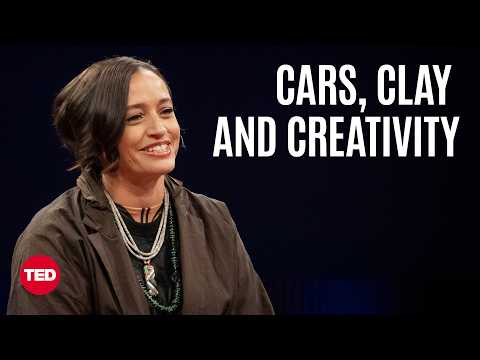
How to Invite Creativity into Your Life | Rose B. Simpson, Debbie Millman | TED
Summarised with Bite · 12 min read
Rose B. Simpson explains creativity as something much bigger than making art objects. In her world, creativity is a way of living with intention, listening to places and materials, and staying free enough that systems, trends, and even the art world do not own you.
0:04 – 5:17
When art was not separate from life
The conversation opens with a simple question about childhood, and Rose B. Simpson answers by quietly undoing the whole premise. There was no clean line, she says, between art and life. Everything was a creative process. Everything was applied. Everything carried intention and meaning. That is the first big idea of the talk, and it lands because she makes it concrete. Her mother, Roxanne Swentzell, was not only an acclaimed sculptor supporting the family through ceramics, she was also making the pottery they ate from, using her skill with earth to help build their home and grow their food. That detail changes what "art" means. Instead of art being something hung in a gallery after survival is handled elsewhere, art becomes one of the tools of survival itself. Simpson describes the art world as something "very strange" because in her upbringing, making was not a separate elite activity. It was utility, beauty, nourishment, shelter, and communication all at once. The unexpected angle here is that creativity was not encouraged as self-expression first. It was embedded in how a family shaped reality. Then Debbie Millman brings in one of the most memorable stories: Simpson's mother once turned off the electricity to see how the family could adapt. Simpson laughs about how frustrating that was when she had to catch the bus at 6:30 in the morning, but she is also deeply grateful. That experiment was part of a larger search for rooting, for living in right relationship with Earth, for growing food, using ancestral seed adapted to the high desert of northern New Mexico, and remembering what life feels like when you are not dependent on a system. Simpson says that because of those choices, because they homeschooled, grew food, and lived so close to material reality, she can actually hear electricity. Whether you take that literally or as a sign of unusual sensitivity, the point is clear: when you strip away background noise, you notice how much your environment shapes you. By the end of this stretch, creativity has become tied to freedom. True sustainability, she says, means always having a choice. If you know how to survive, improvise, and sustain yourself, you are not a victim of the world around you. You have agency.
3 more sections in the app
- 5:45 – 8:32Lowriders, Sunday cruising, and the aesthetics of agency
- 8:32 – 13:15Seeing what things could become
- 13:15 – 17:27Ask, wait, listen, then serve
Summarised by Bite, an AI YouTube video summarizer that also works as a podcast summarizer.