TED
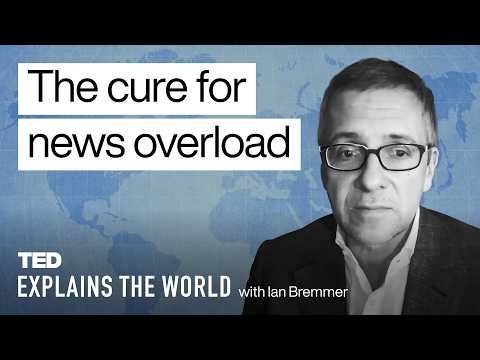
How to Be Smarter About the News | TED Explains the World with Ian Bremmer
Summarised with Bite · 15 min read
Ian Bremmer, founder of Eurasia Group and GZero Media, pulls back the curtain on how he gathers and analyzes global intelligence. From curating thousands of expert voices on Twitter to building decades-long trust with world leaders, he reveals the systems, mental models, and daily rituals that help him separate signal from noise in a world drowning in information.
0:04 – 4:44
The Trust Problem: Why Your News Diet Might Be Making You Dumber
Ian Bremmer doesn't trust newspapers the way he used to. Ten years ago, he could read the New York Times and Wall Street Journal knowing their op-ed pages leaned left and right, but their news coverage stayed neutral. That's changed. Today, even mainstream outlets pick stories and frame angles through a political lens. The shift isn't about fabricated facts, it's about which facts get amplified and how they're contextualized. His solution? The Financial Times remains his most reliable source because it doesn't chase mass appeal. Its technically detailed, occasionally dry coverage serves a narrow audience that needs accuracy over engagement. But Bremmer goes further, building what he calls a "media diet" that includes NHK (Japan), Deutsche Welle (Germany), CBC (Canada), BBC (UK), and Al Jazeera. Each has biases, but their worldviews offer triangulation. A German outlet covering American politics, for instance, lacks the structural partisan incentives baked into US media. On Twitter, Bremmer follows roughly 2,000 carefully curated accounts spanning the political spectrum. He ignores the algorithmic "For You" feed entirely, sticking to his chronological timeline of experts covering issues he tracks. It's not perfect (the feed doesn't load chronologically anymore), but refreshing a few times gives him a cross-section of informed opinion. The key insight: no single source holds the truth. Trust emerges from pattern recognition across multiple perspectives, not from finding one perfect outlet.
7 more sections in the app
- 5:17 – 14:14The Room Where It Happens: How to Build Access Without Selling Your Soul
- 14:03 – 21:32The Analyst's Advantage: Why Political Scientists Beat Journalists at Access
- 18:15 – 23:06The War Room: How Eurasia Group Stays Ahead of Breaking News
- 23:11 – 29:30The Signal Filter: How to Know What Actually Matters
- 30:01 – 35:47The Consumer's Playbook: How to Not Lose Your Mind
- 37:58 – 43:08The Impossible Job: Why Bremmer Won't Work for the Government
- 44:36 – 48:53The Buddhist's Paradox: How to Analyze Without Drowning
Summarised by Bite, an AI YouTube video summarizer that also works as a podcast summarizer.