Andrew Huberman
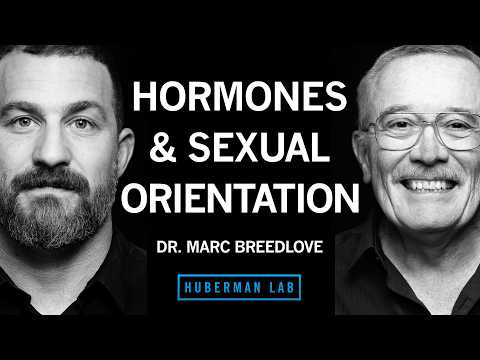
How Hormones Shape Sexual Orientation & Behavior | Dr. Marc Breedlove
Summarised with Bite · 11 min read
Neuroscientist Dr. Marc Breedlove reveals how hormones we're exposed to in the womb—long before we're even aware of ourselves—shape not just physical traits like finger length ratios, but also sexual orientation, partner attraction, and even an aversion to certain sexes. Through decades of research on humans and animals, including gay rams and maternal immune responses, he demonstrates that sexual orientation isn't a choice, but a biological outcome written into our brains before birth.
4:00 – 16:36
The Finger Length Discovery That Changed Everything
Picture Dr. Breedlove in his Berkeley office in 1999, reading a paper that stops him cold. There's a measurable sex difference in finger length ratios—the length of the pointer finger versus the ring finger—and it's present in nine-year-old children. As someone who had studied sex differences his entire career, this was stunning. How had he not known? The ratio, called 2D:4D, tends to be smaller in men (pointer finger shorter relative to ring finger) than in women, where the fingers are more similar in length. But here's the kicker: this difference appears before puberty, which means it almost certainly reflects prenatal testosterone exposure, not societal influence. Within months, he and his team—including a young graduate student named Andrew Huberman—were at Bay Area street fairs, offering dollar lottery tickets to hundreds of people willing to answer intimate questions about their sexuality and let researchers photocopy their hands. The results were striking. While gay and straight men showed no difference in finger ratios—suggesting equivalent testosterone exposure—lesbians displayed more masculine finger ratios than straight women. The only explanation? On average, lesbians had been exposed to more prenatal testosterone in the womb. And if prenatal testosterone affects finger length, Breedlove reasoned, it's probably shaping something far more profound: who we find attractive when we grow up. The implications were staggering: something that happens before birth could determine romantic attraction six, ten, even fifteen years later, long after we've left the womb.
4 more sections in the app
- 1:27:00 – 1:36:15The Older Brother Effect: Your Mother's Immune System Has a Say
- 54:27 – 1:00:00Gay Rams and the Aversion Pathway
- 2:21:00 – 2:29:00The Hypothalamus Stays Plastic (Even in Adults)
- 5:09 – 9:00Why Your First Crush Happened Before Puberty
Summarised by Bite, an AI YouTube video summarizer that also works as a podcast summarizer.