Economics Explained
How AI Will Play Out, Explained
Summarised with Bite · 18 min read
This is a seven-year retrospective tracing how AI automation evolved from theoretical threat to immediate reality. Starting with a 2019 thought experiment about three possible futures, it moves through real-world impacts on outsourced economies like the Philippines, then arrives at MIT's 2025 discovery that we've been measuring AI's threat entirely wrong — focusing on jobs when we should be tracking tasks. The result: 11.7% of U.S. wage value sits exposed, and almost none of it is where anyone was looking.
0:00 – 5:30
The Original Bet: Three Futures for Full Automation
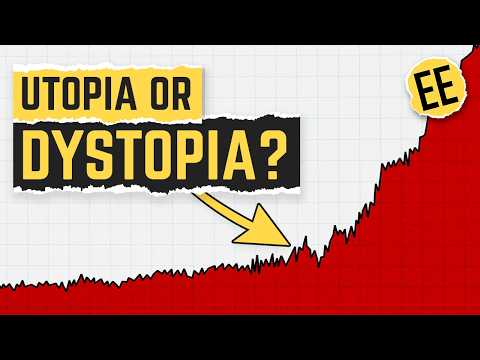
In July 2019, before ChatGPT existed, the channel posed a straightforward question: what happens when machines can do almost every job? The answer split into three scenarios, each mapped onto basic supply and demand economics. The good scenario imagined robot butlers and universal basic income funded by taxing businesses or nationalizing machine ownership. People could still work if they wanted (forming an upper middle class), or invest their UBI allowance for higher returns. The catch? If nobody has to work, birth rates would likely explode. No childcare costs, no career penalties — just pure demographic expansion crashing into Earth's hard resource limits. Humans would transition from economic contributors to resource drains. The bad scenario kept UBI but made it barely livable. Society splits into machine owners and everyone else, with the peasant class scraping by on gig work in fields automation hasn't reached yet. Think Johannesburg's fortress wealth at global scale — technically safe, fundamentally hostile. The ugly scenario dispensed with safety nets entirely. If your time has no economic value, why should businesses provide you with food and housing? The transactional logic is brutal but consistent: businesses serve other businesses and their wealthy owners, not unemployed masses. Population declines through starvation or childlessness, not policy. The core insight was that once humans stop creating value, the economic system stops caring whether they exist. That felt theoretical in 2019. By 2022, when ChatGPT launched, it started feeling like a schedule.
6 more sections in the app
- 17:00 – 22:00When the Factory Floor Was Fine: AI Comes for the Outsourcers First
- 23:00 – 27:00Capital That Replaces Instead of Complements
- 31:00 – 38:00The Iceberg Index: Measuring What's Underwater
- 39:00 – 46:00The Part Everyone Missed: 11.7% and Counting
- 41:00 – 44:00The States Nobody Was Watching
- 43:30 – 47:30Baumol's Cost Disease: The Workers AI Can't Touch
Summarised by Bite, an AI YouTube video summarizer that also works as a podcast summarizer.