The Rest Is History
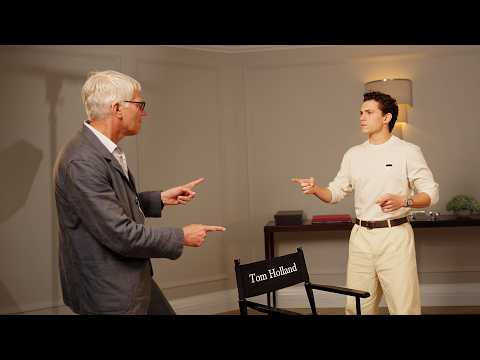
Friend of the Show: Tom Holland Meets Tom Holland to Chat All Things The Odyssey
Summarised with Bite · 9 min read
Two Tom Hollands sit down to talk about why Christopher Nolan's Odyssey is not just another prestige literary adaptation, but a huge entertainment machine built from one of the oldest stories on earth. What makes the conversation worth hearing is that it gets past hype and into the actual mechanics of the film: how Nolan compresses an epic into under three hours, how myth and reality are deliberately blurred, and why characters like Penelope, Telemachus, and Menelaus feel startlingly modern.
0:23 – 5:09
Why The Odyssey fits Nolan so perfectly
The conversation opens with a joke about which Tom Holland is the real one, then almost immediately drops into the serious question hanging over the whole interview: how do you turn something as enormous as the Odyssey into a single film? Tom Holland, the actor, says what struck him first was the "scope and scale" of the story. For anyone who knows the poem, he says, it feels like material for five films, not one. What impressed him was Nolan's ability to get that story into "130 pages" while keeping the heart of it intact, which is his way of saying the script is compressed without feeling reduced. That point matters because the host, Tom Holland the historian, quickly connects the poem to Nolan's signature style. The Odyssey is already full of the very things Nolan loves: fractured time, multiple perspectives, and above all the ache of trying to get home. The surprising angle here is that Homer already behaves a bit like a modern cinematic storyteller. The poem is not neat or linear, and that makes it feel less like a museum object and more like a natural fit for a director known for narrative puzzles. From there, the actor Tom Holland makes a broader claim about scale. Epic storytelling, he says, is not owned by swords-and-sandals films. Superhero cinema has trained audiences to handle large emotional and visual worlds, and Nolan's gift is that he uses that scale first to entertain. He explicitly says Nolan's main focus is not to educate, but to entertain, even if the film carries "topical themes" and feels relevant now. That is an important distinction, because it frames the adaptation not as homework in classical literature, but as an attempt to give audiences a genuine escape. The talk then gets wonderfully concrete when he describes acting for IMAX. He says the jump from stage to screen is big, but the jump from screen to IMAX is even bigger because "you just can't hide anything in IMAX." The image is so detailed that performance has to become more precise and more restrained. It is a useful metaphor for the whole production. A story this old could have become broad and ceremonial, but in his telling, Nolan's format forces intimacy. Even inside a giant myth, the camera demands truth in the face.
2 more sections in the app
- 5:09 – 10:53Telemachus, myth versus reality, and the gods who may or may not be there
- 10:53 – 16:40Penelope's hidden war, Menelaus's damage, and the shadow of collapse
Summarised by Bite, an AI YouTube video summarizer that also works as a podcast summarizer.