Blades Ramble
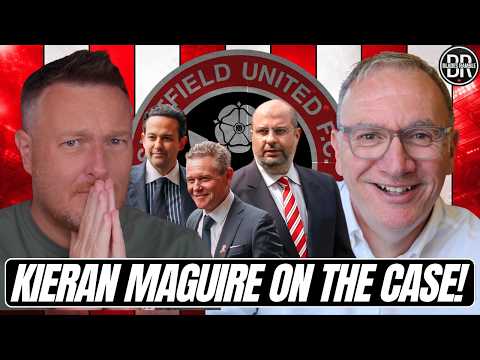
🎙️⚔️ EXCLUSIVE | KIERAN MAGUIRE EXPLAINS THE BLADES OWNERSHIP COURT CASE ⚔️🎙️
Summarised with Bite · 13 min read
This is a plain-English breakdown of Sheffield United's ownership court case, why a missed £35 million payment matters, and what it could actually mean for the club. Kieran Maguire cuts through the panic by separating what is legally serious from what is just rumor, which matters because fans are being asked to fear administration, a points deduction, and ownership chaos all at once.
0:32 – 12:30
The unpaid £35 million, the shell company, and the loophole everyone is staring at
The conversation starts with a fan base stuck in that horrible modern-football position, hearing plenty from one side, almost nothing from the other, and trying to work out whether silence means strategy or trouble. Jimmy sets the scene as plainly as possible: supporters have read about court action, they know United World says it is owed money, and they do not know what that means in practice for Sheffield United. Kieran then lays out the chain of events in simple terms. United World sold Sheffield United, via Blades Leisure and then CO Bidco, on an installment basis. One payment due on 31 December 2025 was not made. Another due on 30 June 2026 was also not made. Add the accrued interest and the disputed sum becomes £35 million. That is the headline number driving all the anxiety. The twist, and it is the part that makes the whole thing feel slippery, is that CO Bidco then appears to have transferred the club to a new US company, 1919 Partners, based in Delaware and owned by Rosen and Eluki. Kieran describes Delaware, diplomatically, as relaxed on corporate governance. The implication is obvious: if the debt sits in one company and the football club has been moved elsewhere, the creditor may be left chasing a husk. That is why the winding-up petition matters, but also why it does not magically solve anything. Kieran says there was no opposition in court to winding up CO Bidco, yet if CO Bidco is just a shell with little inside it, winning that battle does not produce the £35 million. His blunt image is memorable: United World may be owed £35 million by a company with "a couple of pencil sharpeners." That shifts the real question from "Can they wind up the company?" to "Did the owners deliberately structure things to disadvantage a creditor?" This is where he introduces the idea of wrongful or fraudulent trading. He is careful not to present himself as a lawyer, but the principle is simple: if directors knowingly act in a way that harms creditors, that can trigger serious consequences, including disqualification. He then widens the frame to the EFL. Under its rules, being involved in two insolvency events can potentially bar someone from acting as a director and could force a sale. But he also creates the first big release of tension for supporters: the easiest way to make much of this disappear is still the simplest one. If Rosen and Eluki pay what is owed, the case can be settled, the pressure drops, and the feared chain reaction through the EFL is much less likely. From there, Kieran adds an unexpected angle. He suspects the buyers thought they were purchasing a quick promotion story. A club near the top of the Championship, with parachute payments behind it, bought for around £110 million, could be flipped in the Premier League for far more, perhaps £250 million. In that reading, this was not just a football purchase. It was a gamble on timing. The problem is that football refused to behave like a spreadsheet.
2 more sections in the app
- 12:30 – 30:22What the EFL can punish, what it probably cannot, and why the transfer window feels frozen
- 30:22 – 40:54Kieran's gut feeling: a sale before the club takes the real hit
Summarised by Bite, an AI YouTube video summarizer that also works as a podcast summarizer.