The Diary Of A CEO
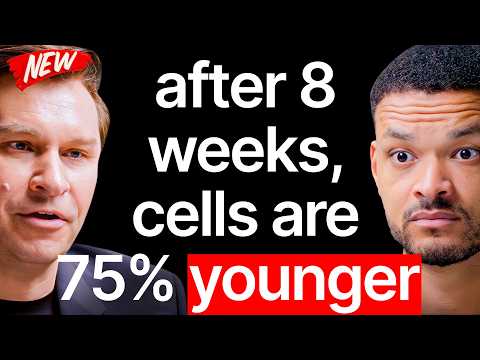
Dr David Sinclair: Can Aging Be Reversed? After 8 Weeks, Cells Appeared 75% Younger In Tests!
Summarised with Bite · 13 min read
Harvard professor Dr. David Sinclair argues that aging isn't inevitable—it's a reversible loss of cellular information. His lab has already reversed blindness in mice and monkeys, and human trials begin next month. If successful, we may soon reset the age of our bodies, cure diseases like Alzheimer's, and potentially live into the 22nd century.
0:00 – 7:12
A Grandmother's Poem and the Birth of a Mission
Sinclair's journey began with a bedtime story. At age six, his Hungarian grandmother Vera read him a poem from *Now We Are Six*: "When I was one, I had just begun… But now I am six. I'm as clever as clever. So I think I'll be six now forever and ever." That innocent wish lodged in his mind. Then came the revelation. Vera crouched down and told him plainly: "I'm going to die. Everything dies. Your parents will be gone. Your pet cat will be dead pretty soon. And you yourself will be dead one day." For a four- or five-year-old, it was heart-wrenching. Sinclair remembers thinking it was cruel—cruel to know your own mortality. He vowed at eighteen to get a PhD, move to the United States, and build a research lab to do something about it. Three decades later, he's a Harvard professor whose lab routinely reverses aging in mice. "The preservation of health and life is the most important thing we can do as human beings," he says. "And for far too long, we've ignored aging or accepted it as natural. I fundamentally reject the idea that aging, just because it's natural, is acceptable."
5 more sections in the app
- 7:12 – 30:00The Information Theory of Aging: Why Cells Forget Who They Are
- 30:00 – 1:00:00The Blind Mice That Could See Again
- 1:00:00 – 1:30:00The NAD Molecule and Why Fasting Slows Aging
- 1:30:00 – 2:00:00Eating the Rainbow and the Molecules Plants Make Under Stress
- 2:00:00 – 2:30:00The Future: Pills, Super Soldiers, and the Singularity
Summarised by Bite, an AI YouTube video summarizer that also works as a podcast summarizer.