The Diary Of A CEO
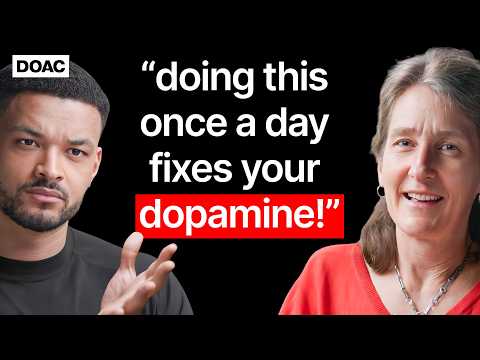
Dopamine Expert: Doing This Once A Day Fixes Your Dopamine! What Alcohol Is Doing To Your Brain!
Summarised with Bite · 16 min read
This conversation turns dopamine from a buzzword into a brutally practical model for why modern life feels so sticky. Dr. Anna Lembke argues that the same brain system driving pleasure also drives pain, so every easy high, from alcohol to porn to sugar to scrolling, creates a rebound that can leave us more anxious, less motivated, and increasingly trapped, but she also lays out how abstinence, self-binding, and deliberately hard activities can help reset the system.
3:37 – 9:43
The rat that would not reach for food
A rat sits with food in front of it and still starves. Not because it cannot eat, but because it cannot make itself move. Dr. Anna Lembke opens with this famous experiment: rats engineered to have no dopamine would eat if food was placed directly in their mouths, but if the food was even a body length away, they would die. That image reframes dopamine immediately. It is not just the chemical of pleasure. It is the drive to approach, explore, investigate, and do the work required for survival. That matters because most people talk about dopamine as if it were a synonym for fun, excitement, or being hooked. Lembke corrects that. Dopamine is not the thing we are addicted to, and it is not morally good or bad. It is a signal. It tells the brain, this might matter, pay attention, move toward it. That is why it is also tied to movement itself. She points to Parkinson's disease, where depletion of dopamine in a brain region called the substantia nigra leads to tremor, stiffness, and difficulty moving. The same system that helps us chase reward also helps us physically get there. Then comes the first big twist. The problem is not that humans are weak. The problem is that our brains were built for scarcity and now live in abundance. We evolved to work hard for a little reward, a long hunt for a small meal, effort before payoff. But modern life flips that sequence. You can swipe, click, order, binge, watch, and consume with almost no friction. The ancient machinery still says, more, this could help us survive. The environment now answers, here is unlimited access. That is why this is not a niche topic about drug users. It is about ordinary life. Lembke says almost everything pleasurable affects dopamine: sugar, video games, pornography, social media, work, alcohol. The more dopamine released, and the faster it hits, the more addictive that substance or behavior can become. She also adds a sobering detail: the genetic risk of addiction is about 50 to 60%. If you have a biological parent or grandparent with addiction, your odds are higher. In other words, the setup is part biology, part environment, and modern life is pouring gasoline on both.
4 more sections in the app
- 9:50 – 27:27Why pleasure always sends the bill later
- 36:34 – 58:24When the reward narrows until it is the only thing left
- 1:40:51 – 2:14:41The reset: pain first, dopamine later
- 3:17:39 – 4:05:34How to break the loop, and why honesty matters more than willpower