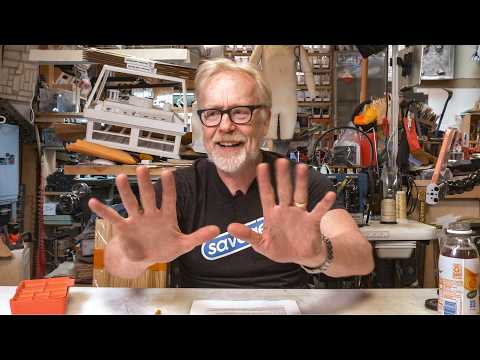
Adam Savage’s Tested
Deceptive AI, Leaving San Francisco, Met Artifacts, and Balancing Productivity With Zoning Out
Summarised with Bite · 7 min read
Adam Savage wrestles with AI's intrusion into prop-making, the reality of affording San Francisco, and the breathtaking experience of handling centuries-old swords at the Met. Along the way, he reframes 'zoning out' as essential 'not doing' and explains why he still won't use AI for aesthetics.
0:00 – 1:30
The AI Reference Problem: When Perfect is Suspicious
A viewer asks if Adam is seeing AI-generated images infiltrate behind-the-scenes photography, and his answer reveals a lurking nightmare for prop-makers. The 'signal-to-noise ratio' in 3D printing references has already degraded, he says, because AI can now generate images that look too good to be true. The danger isn't just aesthetic pollution. It's historical corruption. If an AI image shows a fictional detail on a lightsaber hilt or a nonexistent rivet pattern on a helmet, and a prop-maker replicates it, they're perpetuating something that never existed. Adam's advice: 'Be careful about reference that looks too good to be true.' The joke lands, but the stakes are real. Prop-matching depends on verifiable source material, and AI threatens to turn the entire field into a game of telephone where nobody remembers the original message.
5 more sections in the app
- 1:30 – 2:12San Francisco: Love vs. Affordability
- 2:12 – 3:36Breathtaking Swords: When Objects Come Alive
- 3:36 – 4:39Japanese Craftsmanship: The iPhone Problem in Reverse
- 4:39 – 6:14AI for Code, Not Aesthetics
- 6:14 – 9:53Not Doing: The Skill You Don't Practice
Summarised by Bite, an AI YouTube video summarizer that also works as a podcast summarizer.