Andrew Huberman
Control Sugar Cravings & Metabolism with Science-Based Tools | Huberman Lab Essentials
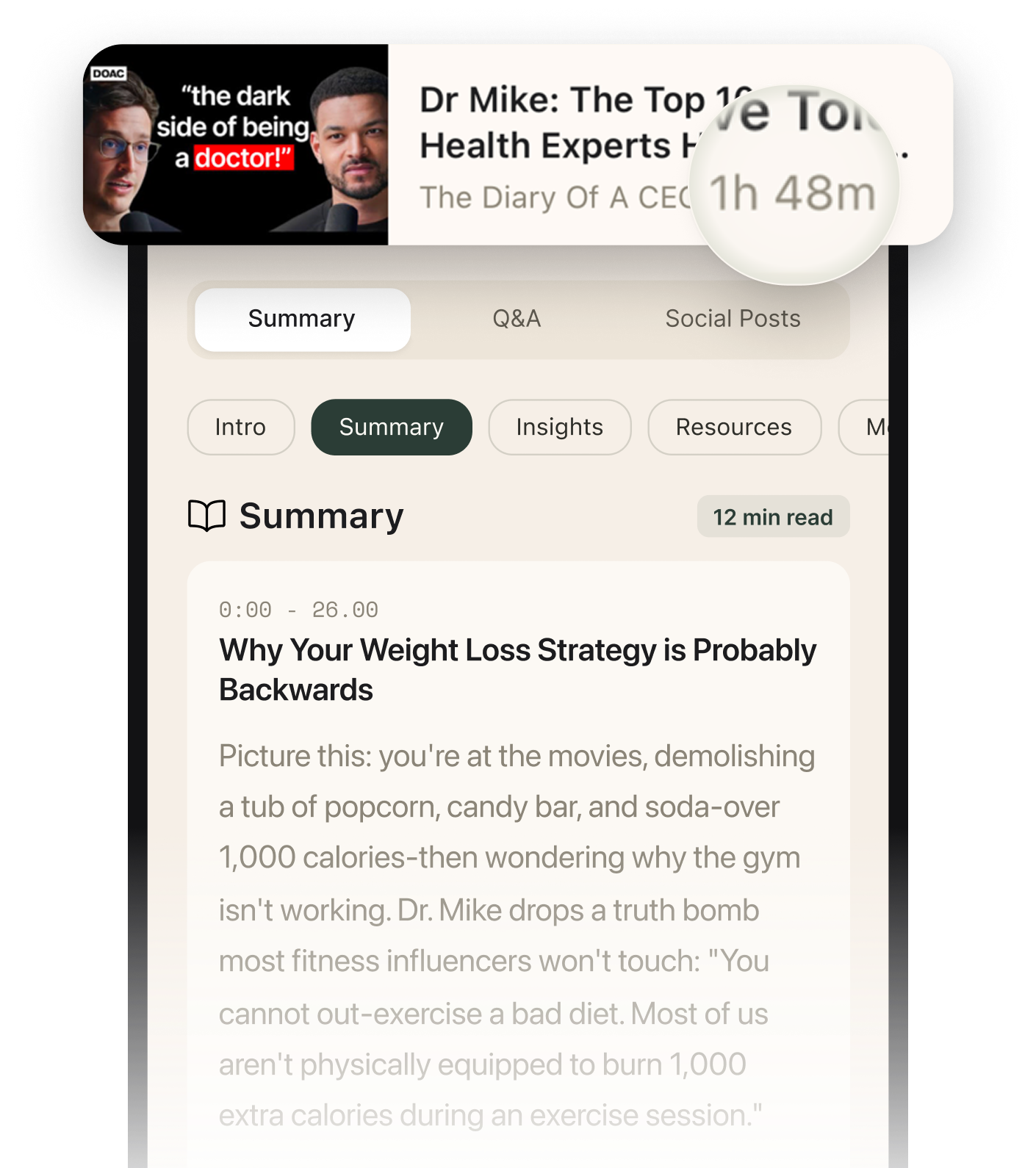
Summarised with Bite · 10 min read
Your brain runs a two-track system for sugar: one craves the taste, the other craves the glucose itself. Understanding these parallel pathways—and how hidden sugars hijack them beneath your awareness—reveals why willpower alone often fails, and why strategic tools like timing, food pairing, and even sleep quality can recalibrate your cravings without relying on discipline.
0:00 – 5:41
The Hormone Cascade: Why Hunger Feels Automatic
Picture your stomach sending a chemical messenger to your brain, demanding food. That's ghrelin, a hormone that climbs steadily the longer you go without eating, targeting neurons in the arcuate nucleus of your hypothalamus like a rising alarm. When you finally eat, ghrelin drops, signaling satisfaction. But here's where things get interesting: blood glucose (blood sugar) spikes after almost any meal, triggering insulin from your pancreas to keep levels stable. Why does this matter? Because your brain is a glucose hog. Neurons, especially those controlling movement and deliberate thought, burn through glucose at astonishing rates. Reading this paragraph with full attention, having an intense conversation, or learning a new skill all require serious energy. That's why mental fatigue feels just as real as physical exhaustion. Your nervous system doesn't just prefer glucose; it demands it. But fructose, the sugar in fruit and high-fructose corn syrup, plays a darker role. Unlike glucose, fructose can't directly enter the brain. It must first convert to glucose in the liver. This detour triggers hormonal shifts that suppress the very signals meant to reduce ghrelin, meaning you stay hungry even after consuming plenty of calories. A piece of fruit might contain 1-10% fructose, manageable enough. High-fructose corn syrup, at 50% or more, floods your system and keeps the hunger engine running long after your caloric needs are met.
5 more sections in the app
- 5:41 – 12:23The Two Pathways: Taste Versus Nutrition
- 14:28 – 17:35Glycemic Index: The Speed and Height of the Spike
- 18:36 – 24:22Glutamine, Lemon Juice, and Neuropod Cells: Practical Interventions
- 25:22 – 26:24Berberine and the Sharp Blade Tools
- 26:57 – 29:31Sleep: The Overlooked Metabolic Regulator
Summarised by Bite, an AI YouTube video summarizer that also works as a podcast summarizer.