TEDx Talks
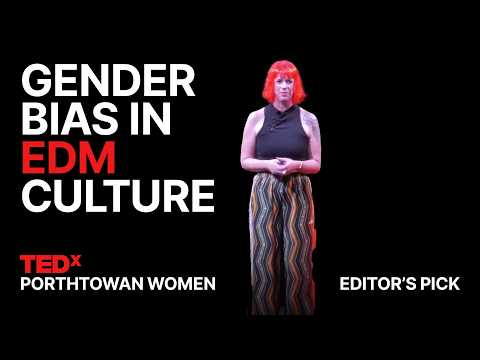
Bad Gals Run The Stage: Inequality in the Music Industry | Natalie Nicholas | TEDxPorthtowan Women
Summarised with Bite · 13 min read
Natalie Nicholas uses DJ culture to expose a bigger pattern: women have always helped build music scenes, but the industry keeps framing them as guests instead of creators. Her talk matters because it turns inequality from an abstract complaint into something you can feel, from erased pioneers to school programs that accidentally select only boys, and then shows how women can answer that with visibility, solidarity, and economic pressure.
0:06 – 2:12
From the shop window to the stage
A T-shirt in a shop window stops Natalie cold: "Bad girls go backstage." It is meant to look cheeky, maybe even empowering, but she hears something darker in it. The fantasy being sold is not that women headline, create, or command the room. It is that if they play the game right, they might get access to a male star standing somewhere behind the curtain. Natalie flips that image instantly. In her world, the powerful women are not hovering near the stage, they are on it, "blazing, magnetic, and untamable." That reversal is the engine of the whole talk. She asks a sharp question early: what if the bravest thing a woman could do was to be visible? That lands because she is not speaking as an outsider theorizing about culture. She performs as DJ Nats, runs the female-led electronic music brand Free Freestyler Events in Cornwall, is known for the annual festival Kanotopia, and founded Amplify, which works with teenagers through electronic music and DJing. Then she makes an unexpected move. Instead of listing credentials, she points out what she does not have. She did not learn on "belt-drive turntables 20 years ago." She has no official qualifications in event management or festival production. Yet she says, plainly, "by embracing that bad girl energy, I can sell out a festival." That matters because she reframes the usual female pressure. Women under late-stage patriarchy and capitalism are constantly told they need more, more training, more polish, more permission, more proof. Natalie argues the problem is often not lack, but "the crushing weight of socially prescribed perfectionism." In other words, the bar keeps moving, and women are trained to think they are the problem. Her promise for the rest of the talk is bigger than music industry gossip. She is going to trace women back to "the origins of music and shamanism," and suggest that what women are searching for is not some new entitlement. It is a center they once already occupied.
4 more sections in the app
- 2:12 – 4:21The women history remembers poorly
- 4:21 – 6:27Why the pipeline keeps narrowing
- 6:58 – 9:34The cost of visibility, and how women turn it back
- 9:34 – 11:42Vote with your feet, remember what was already true
Summarised by Bite, an AI YouTube video summarizer that also works as a podcast summarizer.