20VC with Harry Stebbings
Atlassian CEO: Why Agents Won't Replace Interfaces | Why Enterprises Won't Trust Chinese Models
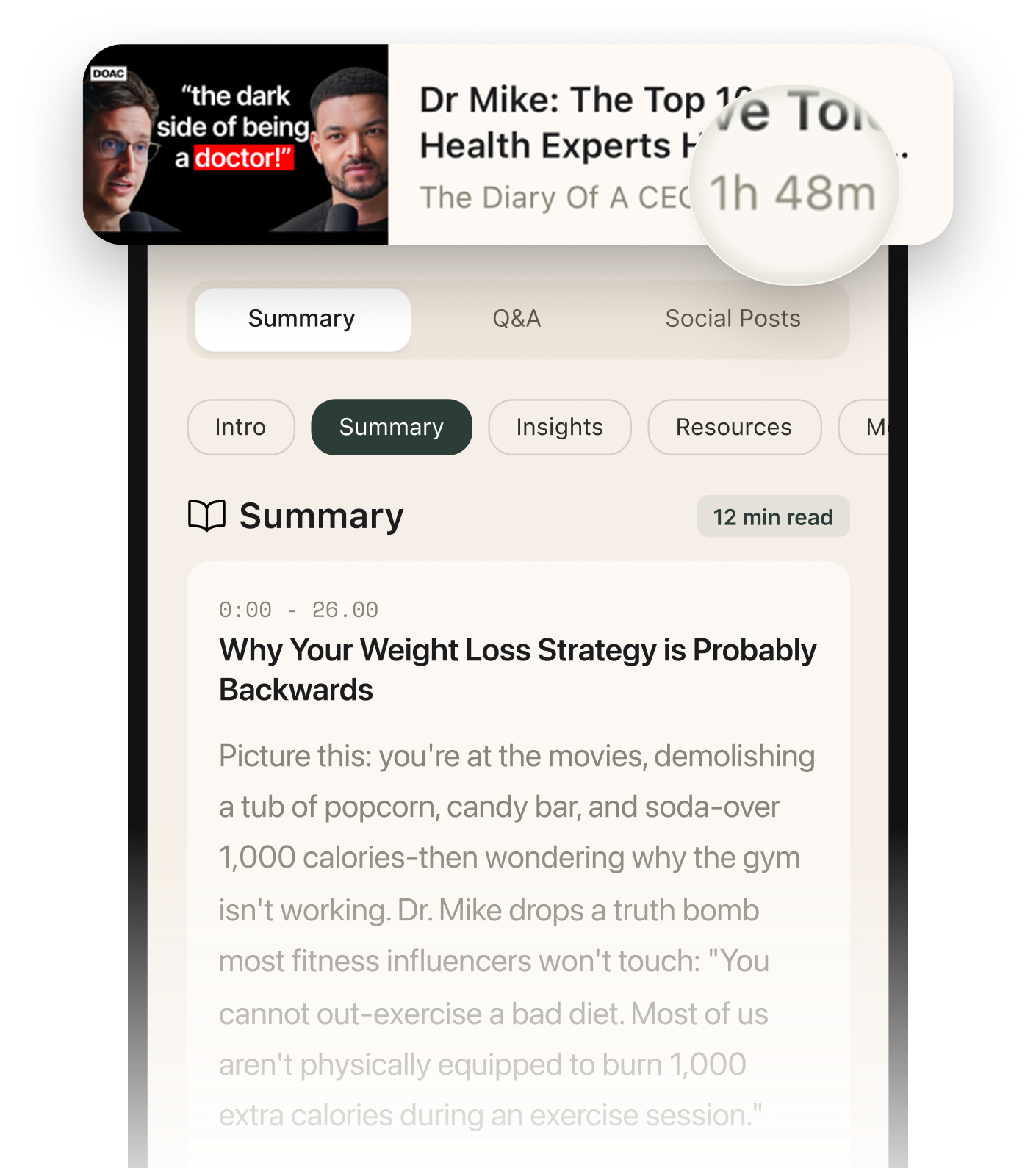
Summarised with Bite · 15 min read
Mike Cannon-Brookes argues that AI agents will not erase software interfaces, they will make design, context, and trust even more important. The big idea is that enterprise winners will not just have access to models, they will know how to route them cheaply, wrap them in great product experiences, and ground them in a live company-specific context graph.
0:00 – 14:14
Why giving up on interfaces is a brainless bet
The conversation opens with a blunt line that sounds almost like a dare: if you stop improving your user interface because agents can act on behalf of users, that is a "brainless bet." Mike Cannon-Brookes pushes back on the premise that software companies are destined to become invisible data providers while horizontal agents do all the work. His argument is more grounded. Some tasks are pure utility, like buying a charging cable on Amazon, where you just want the thing and want to move on. Other tasks involve taste, collaboration, judgment, and iteration, and those do not collapse neatly into a generic agent flow. That distinction matters because Atlassian lives in the world of enterprise collaboration, where work is messy and social. In that setting, agents can move work forward, remove drudgery, and help people focus on higher-value creative work, but they do not eliminate the need for good interfaces. Mike says the opposite may be true: design and experience become more important in the AI era, not less. His reasoning is surprisingly simple. If technology creation becomes cheap and abundant, then the differentiator shifts to how well a product helps a person actually use that abundance. He says Atlassian is investing in design and experience "in a way that we never have been before," and compares this moment to the mobile transition, the last time software teams had to rethink foundational interaction patterns. He also rejects the idea of one universal magic agent. Instead, he describes a layered world where horizontal agents, vertical agents, and product-native interfaces all coexist. He gives concrete examples: Atlassian agents work inside Claude, Codex, Cursor, Teams, and Slack, while Atlassian also brings Figma and Databricks functionality into its own platform. If you are reading a Confluence page and want to highlight a number and ask for a quick check that pulls from Databricks or Snowflake, that is useful. But that does not turn Confluence into a full BI tool. The point is not to force every task into one interface, but to let each interface do what it is best at. That leads into what Mike sees as one of Atlassian's core strategic decisions for the next year: keep building the best enterprise context graph in the world, and simultaneously solve the new design problems created by agents. He talks with unusual excitement about those problems. Text boxes, he says bluntly, "suck" as an interface for tools with near-unlimited power. Teams also need better ways to show what an agent did, what a human did, and where responsibility sits between them. If Codex creates a pull request, was that Harry, was that Codex, or was it Codex on behalf of Harry? The product challenge is not just capability. It is provenance, accountability, visibility, and trust.
3 more sections in the app
- 14:14 – 25:38The trust problem, Chinese models, and the myth of everyone building their own model
- 25:38 – 38:28Cost discipline, model routing, and the shift from information asymmetry to imagination asymmetry
- 38:28 – 58:20The context graph, pressure from OpenAI and Anthropic, and what sustains a founder for decades
Summarised by Bite, an AI YouTube video summarizer that also works as a podcast summarizer.