Tabernacle Of Praise
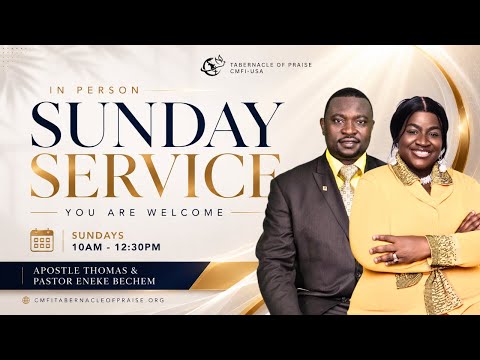
ASCENDING FROM GRACE TO GLORY, Apostle Thomas Bechem // 08/02/2026 | Tabernacle of Praise CMFI-USA
Summarised with Bite · 30 min read
This is a four hour church service that moves from intense worship into testimonies, church life, and then a long sermon by Apostle Thomas Bechem on one central idea: grace is not the finish line, it is the doorway to glory. The message matters because he keeps pressing one uncomfortable question, if God has truly touched your life, where is the visible evidence, and what does it take to move from being rescued by grace to being revealed by glory?
0:00 – 24:30
The room is cleared before a word is spoken
The service opens like a furnace already burning. Voices are not chatting or easing in, they are pushing against heaviness. The prayer is direct: "Every form of heaviness be removed from your people." That sets the tone for the first hour. This is not treated as a warmup. It is treated as spiritual alignment, the moment where people try to get themselves out of the way so God can act. The repeated language is striking. "We remove ourselves." "We align ourselves." "Take your place." The congregation is being coached into a posture before any sermon arrives. Even the prayer for the worship team and preacher is framed in terms of surrender, that worship will be "acceptable," that there will be "unity" and "synergy," and that the servant bringing the word will be anointed so the word comes "with power" and "with authority." In other words, the early minutes are doing theological groundwork without calling it that. They are saying: if God is going to move, ego has to move first. Then the music carries that same theme in a more personal key. "I’m no longer a slave to fear, I am a child of God" becomes more than a song lyric because it answers the anxiety that was named at the start. The worship leaders lean on identity language: chosen, redeemed, beloved, righteous. Later they shift into hunger language, "There’s nothing like your presence, Lord, all I want is to be with you," and then into adoration, "For you are God and we worship." The sequence matters. First fear is broken, then identity is restored, then desire is purified, then worship becomes natural. A surprising angle here is that the service spends a long time saying one thing in many forms: who gets to occupy the center. Fear cannot. Self cannot. Even ministry cannot. Only God can. That makes the rest of the service make more sense, because once that center is established, testimony, money, announcements, and preaching all become part of one bigger act of worship instead of separate church activities.
11 more sections in the app
- 24:30 – 44:00Undignified praise and the refusal to act small
- 44:00 – 1:00:15From overwhelming presence to a throne in the heart
- 1:00:15 – 1:16:15Money, ministry, and why ordinary church business becomes spiritual evidence
- 1:16:15 – 1:37:28Testimonies where prayer becomes rent keys, job offers, and inner freedom
- 1:37:28 – 1:45:13The church as a working body, not just a worship room
- 1:45:13 – 1:59:50Apostle Thomas Bechem begins with a challenge: stop talking about grace, show it
- 1:59:50 – 2:12:24The golden chain: foreknown, called, justified, glorified
- 2:12:24 – 2:26:24Paul and Joseph: grace finds people at their lowest, then refuses to leave them there
- 2:26:24 – 2:46:14Moses and David: God does not call the qualified, he qualifies the called
- 2:46:14 – 3:03:32The furnace on the road: why many never reach glory
- 3:03:32 – 4:00:26Settlement, rising, and communion as an enacted conclusion
Summarised by Bite, an AI YouTube video summarizer that also works as a podcast summarizer.