TEDx Talks
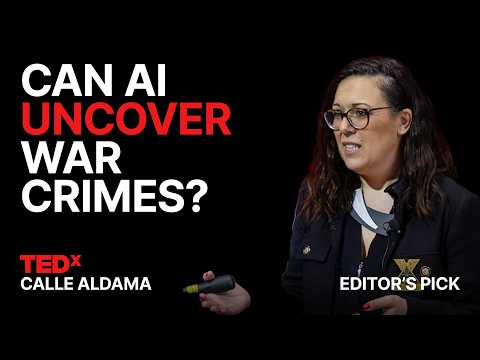
AI is shaping war—what about peace? | Branka Panic | TEDxCalle Aldama
Summarised with Bite · 9 min read
Branka Panic flips the usual AI debate on its head. Her talk is not really about whether machines will choose violence, but whether humans will keep using powerful tools for war when the same tools could help document atrocities, predict conflict, and rebuild dialogue. It matters because she grounds that question in both lived experience of war and concrete examples showing AI can either multiply civilian harm or expand the chances for justice and peace.
0:05 – 4:51
War is not an AI accident, it is a human choice
The talk opens with a line that sounds like science fiction turning into prophecy: an AI system says it may destroy humankind because humans will program it toward misguided goals. Branka Panic immediately twists the knife. The real danger was not a rogue machine making its own evil choices. It was us. She points to Gaza, where AI was used to identify targets, including not just military infrastructure but homes and people, and says human reviewers took an average of 20 seconds to review targets before strikes. The sales pitch was precision warfare. The outcome was brutal: 80% of those killed were civilians, 70% women and children. Her point is sharp and memorable, AI did not fail here. We did. That accusation lands harder because she is not speaking as a distant analyst. She grew up in Yugoslavia and learned what panic actually feels like. At nine, she watched refugee children arrive at school after losing homes, siblings, and parents. At fifteen, war reached her city. Schools closed. Families moved into basements. She remembers the sound of bombs, and even more, the silence after them. That image does the work of a whole report. It turns the abstract phrase "conflict zone" back into a child waiting in the dark, hearing whether another blast is coming. Then comes the unexpected turn. Instead of accepting war as the natural answer, she joined the anti war movement and marched while bombs were still falling. She says she became a peacebuilder, someone choosing to build bridges while others build bombs. That line reframes peace work from soft idealism into active resistance. From there she zooms back out to the global picture: 59 conflicts, the highest number since the end of the Second World War, 123 million people forcibly displaced, and one in five children globally living in or fleeing conflict zones. So the question that drives the rest of the talk is not whether AI is dangerous. We already know it is. The better question is whether peace, which badly needs allies, can recruit AI too.
2 more sections in the app
- 4:51 – 8:30From digital witnesses to early warning systems
- 8:30 – 14:17What if AI could help us discover new moves for peace
Summarised by Bite, an AI YouTube video summarizer that also works as a podcast summarizer.