Daniel Priestley
7 Unsexy Habits That Build a $1 Million Business
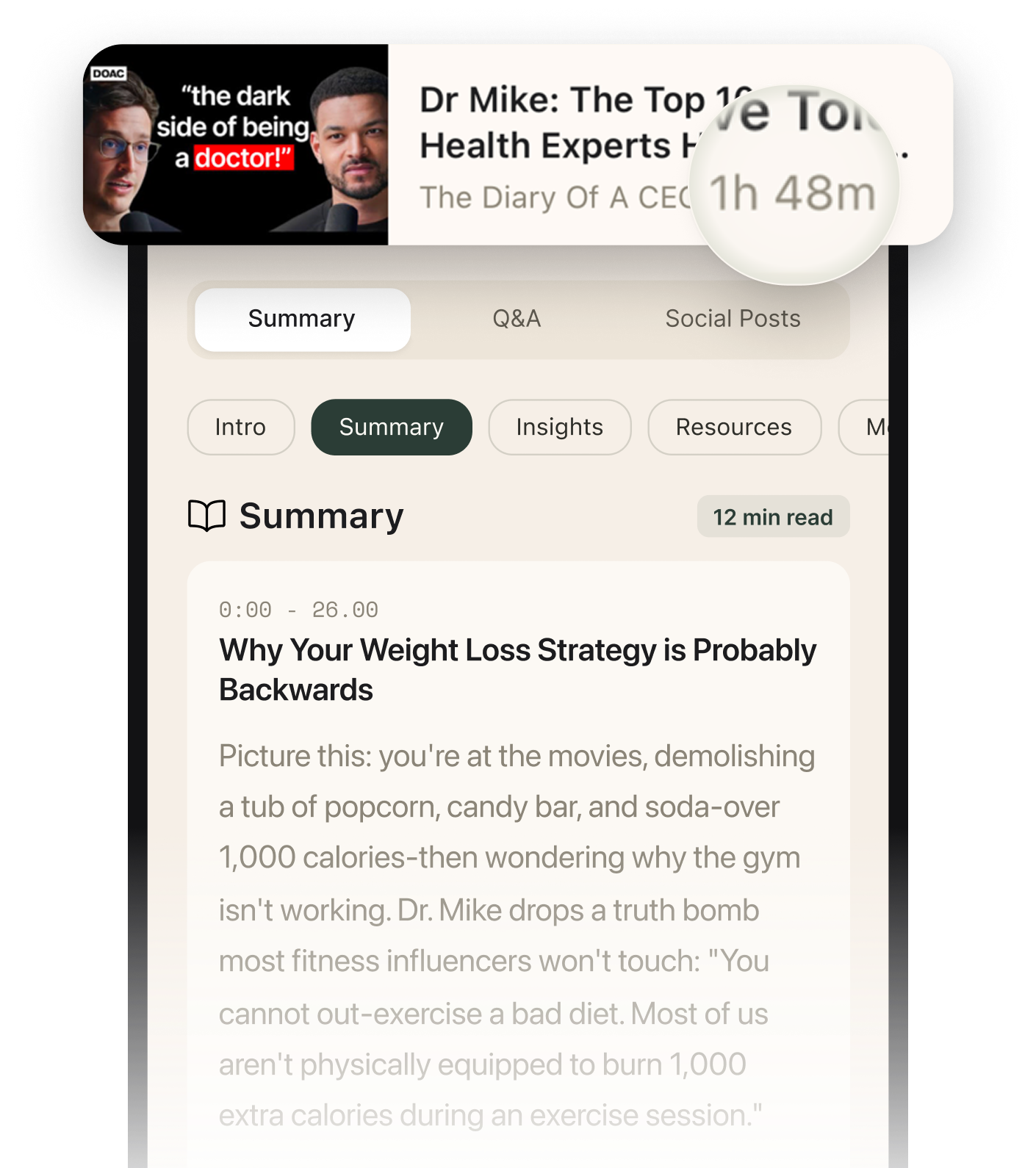
Summarised with Bite · 14 min read
This is a blunt argument that million-dollar businesses are usually built on boring repetition, not glamorous founder routines. Daniel Priestley walks through seven habits, from designing a perfect repeatable week to running live intro workshops and surrounding yourself with people one level ahead, and his core message is simple: stop improvising, start systemizing, and do the uncomfortable work that actually creates customers.
0:00 – 3:02
The week stops being chaos when it becomes a machine
He opens by almost mocking the internet's favorite success rituals. No 5:00 a.m. wakeups. No saunas. No ice baths. No elaborate journaling. Instead, he points back to the boring actions that helped him build seven and eight-figure businesses, and the first one is surprisingly strict: plan a perfect repeatable week in hour-by-hour detail for everyone on the team. The idea lands because he makes it numerical. A million dollars a year, in his framing, is basically "$25,000 a week times 40 weeks of the year," repeated over and over. That turns a huge, fuzzy goal into a weekly production target. He uses two concrete analogies to make the point stick. McDonald's does not reinvent the Happy Meal every time a customer orders one. A famous band does not improvise an entirely new concert every night. The band performs, packs down, travels, sets up, rehearses, and delivers the same machine-like sequence in city after city. He wants a business to work like that. What does that look like in practice? He says they map the next 12 months around those $25,000 weeks, then build a future-state org chart so every role is clear. They document how many ads run, how much content gets created, how leads are followed up, how sales calls happen, and even how team meetings are structured. At any moment in the week, they know where each person should be and what the profit and loss should look like. If the model says "$25,000 worth of revenue with $20,000 worth of overhead," then repeating that week should produce a profitable year. The unexpected angle is that improvisation, which many founders treat as creativity, is framed here as a liability. He says too many entrepreneurs "just make it up" week to week, when the real goal is to crank the handle on something that already works. He briefly notes that AI now makes this planning easier, but the deeper point is timeless: businesses scale when the week becomes predictable enough to repeat.
3 more sections in the app
- 3:02 – 8:40Before the business starts, you recruit the crew and sharpen the offer
- 8:40 – 14:51The unglamorous grind is more leads than you think and harder meetings than you want
- 14:51 – 21:34Sell live, repeat yourself, and stay near people one stage ahead
Summarised by Bite, an AI YouTube video summarizer that also works as a podcast summarizer.