MIT OpenCourseWare
16. Portfolio Management
Summarised with Bite · 9 min read
A MIT finance lecture revealing how Modern Portfolio Theory plays out in practice. The professor dismantles the myth that optimal portfolios are just math problems, using metronomes and a swaying bridge to show why sophisticated models fail when everyone follows the same strategy — and why human judgment still matters.
0:00 – 18:18
The Five-Minute Portfolio Test
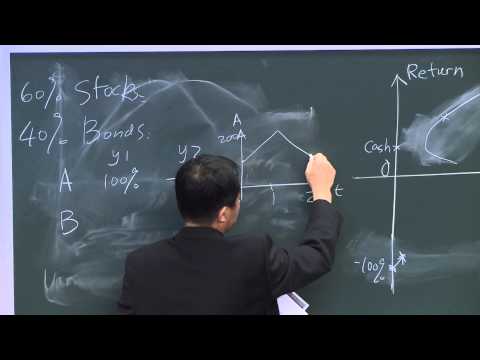
The professor hands blank paper to each student with one instruction: design a portfolio in five minutes. No constraints, no goals specified, just intuition. As answers flow back — small cap equities, bonds, real estate, lotteries, rare coins, Apple stock, family trusts — he plots them on a return-versus-volatility chart. Cash sits at zero volatility with positive return. Lottery tickets cluster near negative 100% return with almost no deviation (you just lose). A fair coin flip lands at zero expected return with 100% volatility. US government bonds fall between cash and stocks. Venture capital pushes into high-return, high-volatility territory. Commodities sit even further out. The exercise reveals something crucial: before calculating optimal weights using elegant formulas, you must answer a more fundamental question — what is your goal? The professor sketches two curves over a lifetime: spending and earning. They rarely align. You spend heavily in youth (education, house, kids) while earning little. Earnings peak around age 50, then taper. The gap between these curves defines why you need a portfolio — to generate cash flows that smooth the mismatch. A university endowment must fund annual operations while preserving capital forever. A pension fund must predict when workers retire and draw benefits. A trader allocating capital among strategies faces the same challenge: how much risk, how much diversification, what time horizon? The math is secondary to understanding your situation.
3 more sections in the app
- 18:18 – 56:18Two-Asset Portfolios: Where Intuition Becomes Math
- 56:18 – 1:17:57The Millennium Bridge and the Metronome Problem
- 1:17:57 – 1:28:30Why Humans Still Matter (For Now)
Summarised by Bite, an AI YouTube video summarizer that also works as a podcast summarizer.